In-Home Puppy Training in Kansas City
Start Strong. Build Confidence. Create a Calm Home.
What Are the Best Methods for Puppy Training?
What Are the Best Methods for Puppy Training?
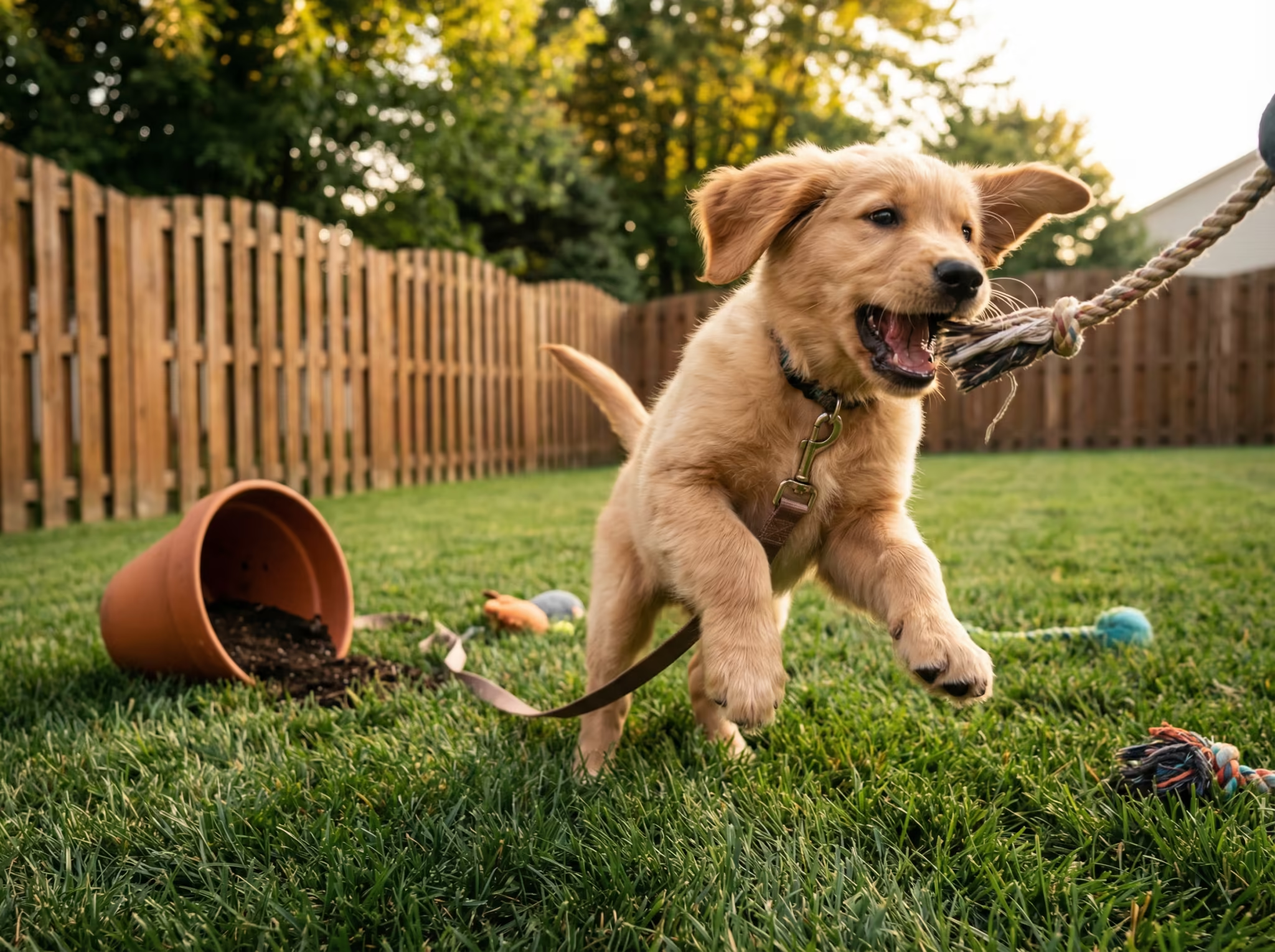
The best methods for puppy training are positive reinforcement, threshold-based exposure, and household consistency — and these are the foundation of every program our experienced, certified trainers at Marquis Dog Training and Puppy Obedience Trainer run in Kansas City.
Our dog trainers use a trust-first method: your puppy earns rewards for the behaviors you want to see, learns at a distance where they can stay calm, and meets the same rules from every person in the home. No force. No intimidation. No pressure tactics. Puppies learn faster and retain skills longer when they understand what’s being asked and feel safe practicing it, and that’s exactly what trust-first training is built to do.
The science backs the approach. Between 3 and 14 weeks, your puppy’s brain is neurologically primed to accept new people, dogs, sounds, surfaces, and environments. Puppies who get structured training during this window show significantly fewer problem behaviors as adults — less aggression, less anxiety, less excessive barking. After the window closes around 16 weeks, fear-based behaviors become much harder to undo. That’s why our skilled team at Marquis Dog Training prioritizes puppy work the way we do.
Three Flexible Approaches to Puppy Training Tailored to Your Schedule
Select the format that matches your family’s pace and goals
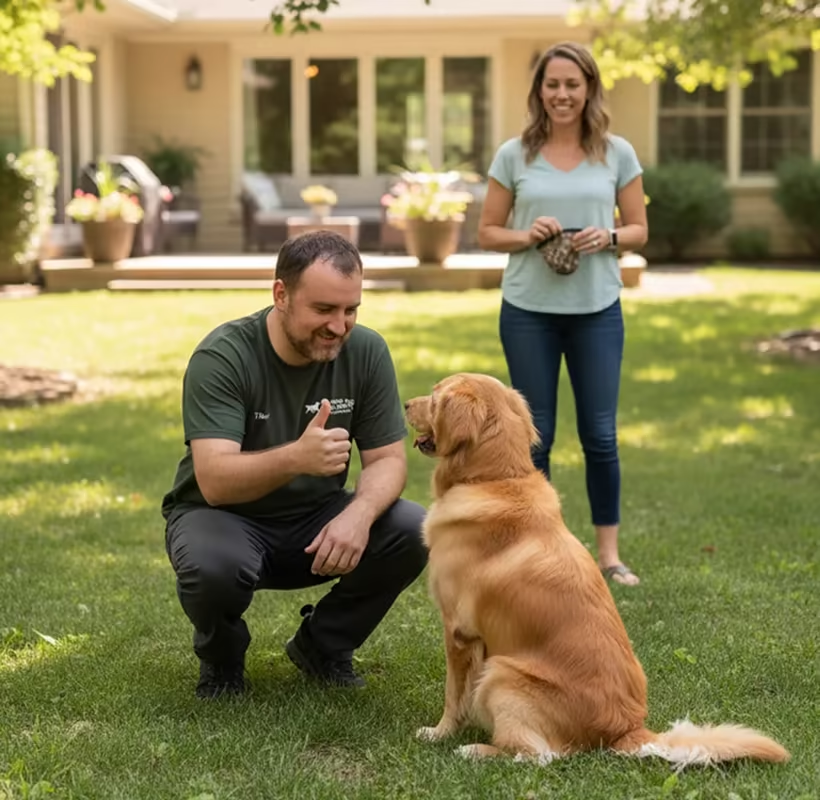
In-Home Private Sessions
Custom one-on-one in-home puppy training in Kansas City where your puppy lives and learns best, with individual attention from a qualified dog behaviorist.
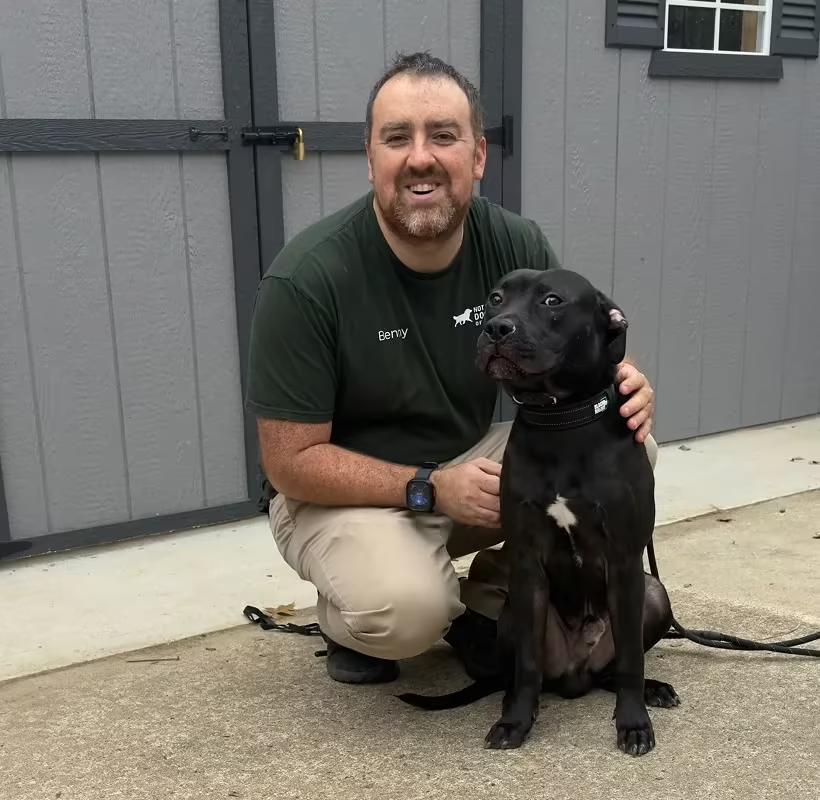
Board & Train Intensive
Your puppy stays with us at our professional training facility for 2-3 weeks of daily puppy training, similar to a comprehensive puppy boot camp. Daily photo/video updates keep you connected.
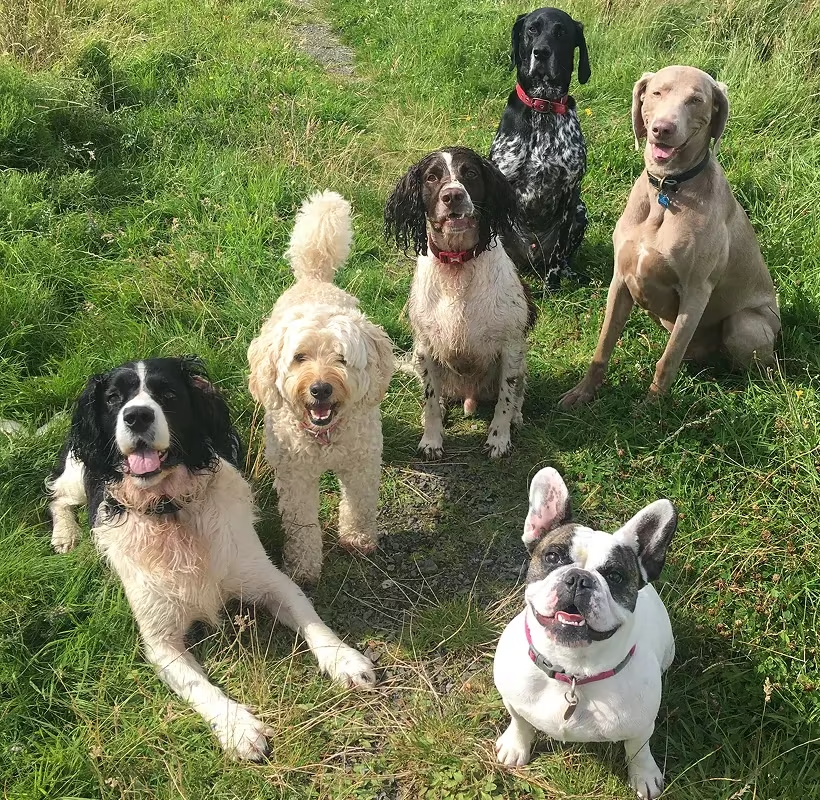
Small-Group Puppy Classes
Structured socialization in our puppy kindergarten setting builds confidence and impulse control, offering an affordable option for first-time puppy owners.
Complimentary 30 min in-home visit

Every Foundation Skill
Your Puppy Needs
The first 6 months of a puppy’s life are critical. The skills, confidence, and foundation you build now determine who your puppy becomes.
Our comprehensive puppy training program is designed to address every essential development stage – from housebreaking and house training to socialization and basic obedience.
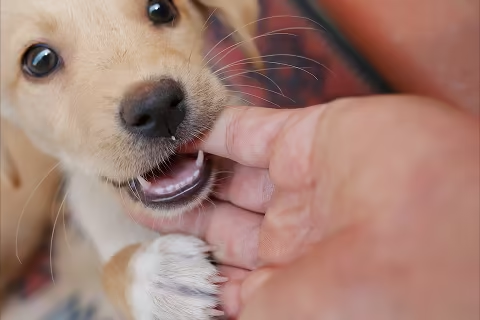
Bite Inhibition & Gentle Mouth
Interactive play drills teach puppies to control bite pressure. We redirect mouthing to appropriate toys, reward soft interactions, and establish “off” and “gentle” cues, plus teach “drop it” for safe object release.
Why it matters: Bite inhibition learned early prevents adult biting behavior.
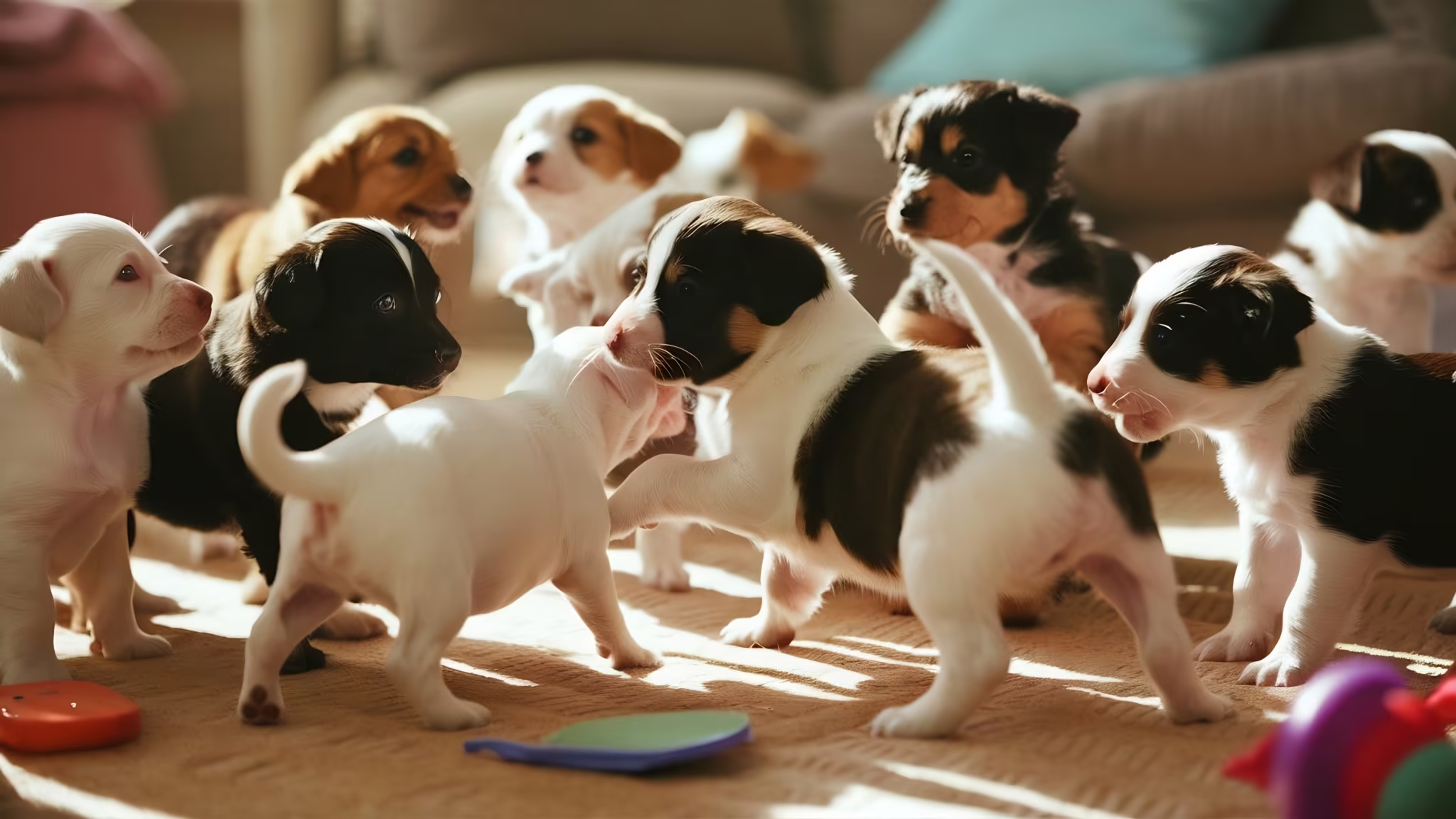
Safe Socialization & Confidence Building
Controlled exposure to people, dogs, sounds, and environments during the critical 3-14 week window. Positive associations build confidence without overwhelming your puppy. Our puppy socialization class and puppy playgroup sessions provide safe, supervised interactions.
Why it matters: Puppies socialized before 14 weeks grow into calm, confident dogs in any setting.
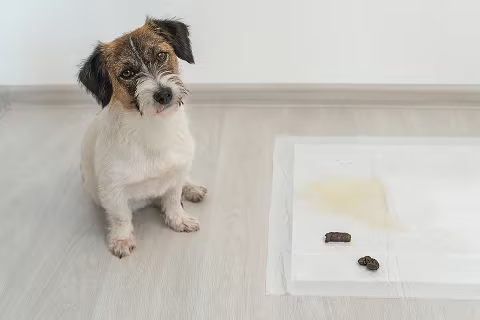
Potty training & crate mastery
Timed feeding schedules, cue-based praise (“go potty”), crate training as a positive safe space, and kennel training techniques. We teach you to read your puppy’s signals and establish consistent routines, including proper use of puppy pads and accident cleanup with enzymatic cleaners.
Why it matters: Potty training frustration is the #1 reason puppies are rehomed.
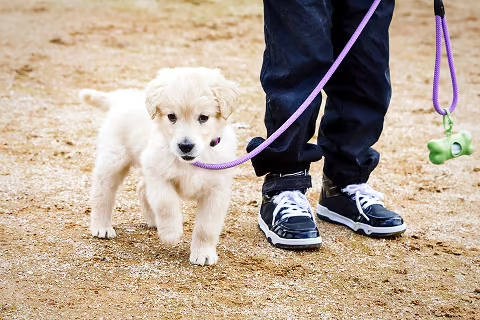
Loose-Leash Walking & Focus
Position-based training (“heel”), attention cues (“watch me”), reward-based redirection. Progressive stages from indoor walking to neighborhood walks with distractions.
Why it matters: Loose-leash walking = enjoyable walks for life. Training this early prevents retraining a strong adolescent dog.
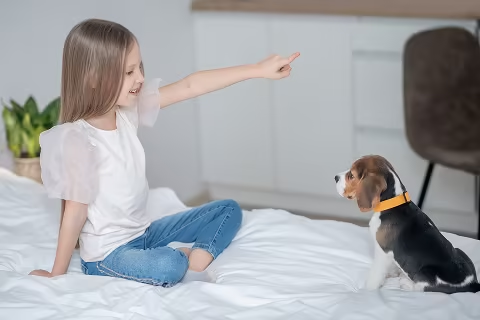
Basic Obedience Commands (Sit, Down, Stay, Come)
The problem we solve: Puppy ignores you, doesn’t respond to name, won’t settle when asked
Why it matters: Teaching them early with clarity and consistency prevents confusion and builds trust. Calm foundation for everything else.

Take our 3-minute survey
so we can tailor your consultation and provide the best guidance
Bite Inhibition & Gentle Mouth
Interactive puppy training drills teach puppies to control bite pressure, redirect mouthing to appropriate toys, and build gentle behavior.
Why it matters: Bite inhibition learned early prevents adult biting behavior.
Safe Socialization & Confidence Building
Controlled exposure through puppy training builds confidence with people, dogs, and new environments without overwhelming your puppy.
Why it matters: Puppies socialized before 14 weeks grow into calm, confident dogs in any setting.
Potty Training & Crate Mastery
Potty training through structured puppy training helps establish consistent routines, crate comfort, and clear communication.
Our success rate: 95% of puppies achieve daytime potty reliability within 2 weeks
Why it matters: Potty training frustration is the #1 reason puppies are rehomed.
Loose-Leash Walking & Focus
Position-based training (“heel”), attention cues (“watch me”), reward-based redirection. Progressive stages from indoor walking to neighborhood walks with distractions.
Why it matters: Loose-leash walking = enjoyable walks for life. Training this early prevents retraining a strong adolescent dog.
Basic Obedience Commands (Sit, Down, Stay, Come)
Basic obedience training teaches your puppy essential commands like sit, down, stay, and come with clarity and consistency.
Why it matters: Teaching them early with clarity and consistency prevents confusion and builds trust. Calm foundation for everything else.
Take our 3-minute survey
so we can tailor your consultation and provide the best guidance

Flexible approach for every family and every dog
EEvery household is different, and so is every puppy. Whether you’re a working professional with a puppy, a family with children, or managing a busy schedule as a first-time puppy owner, or helping a reactive or adopted dog adjust, we tailor each training journey to fit your lifestyle.
Flexible Scheduling & Virtual Support
Evening and weekend sessions available. Video check-ins via text or Zoom keep momentum strong between sessions.
Why it helps: Busy families stay consistent without sacrificing work or family time.
Training Built Into Daily Routines
Turn ordinary moments – walks, meals, playtime – into effective learning opportunities without adding hours to your day.
Why it helps: Training becomes a lifestyle, not a chore. Skills stick faster.

Threshold-Based Behavior Modification
Gentle, step-by-step exposure paired with rewards. We work at a distance where your puppy stays calm, then gradually build confidence.
Why it helps: Perfect for reactive, anxious, or adopted puppies. No force, just trust.
Complimentary 30 min in-home visit
AKC CGC Foundation Pathway
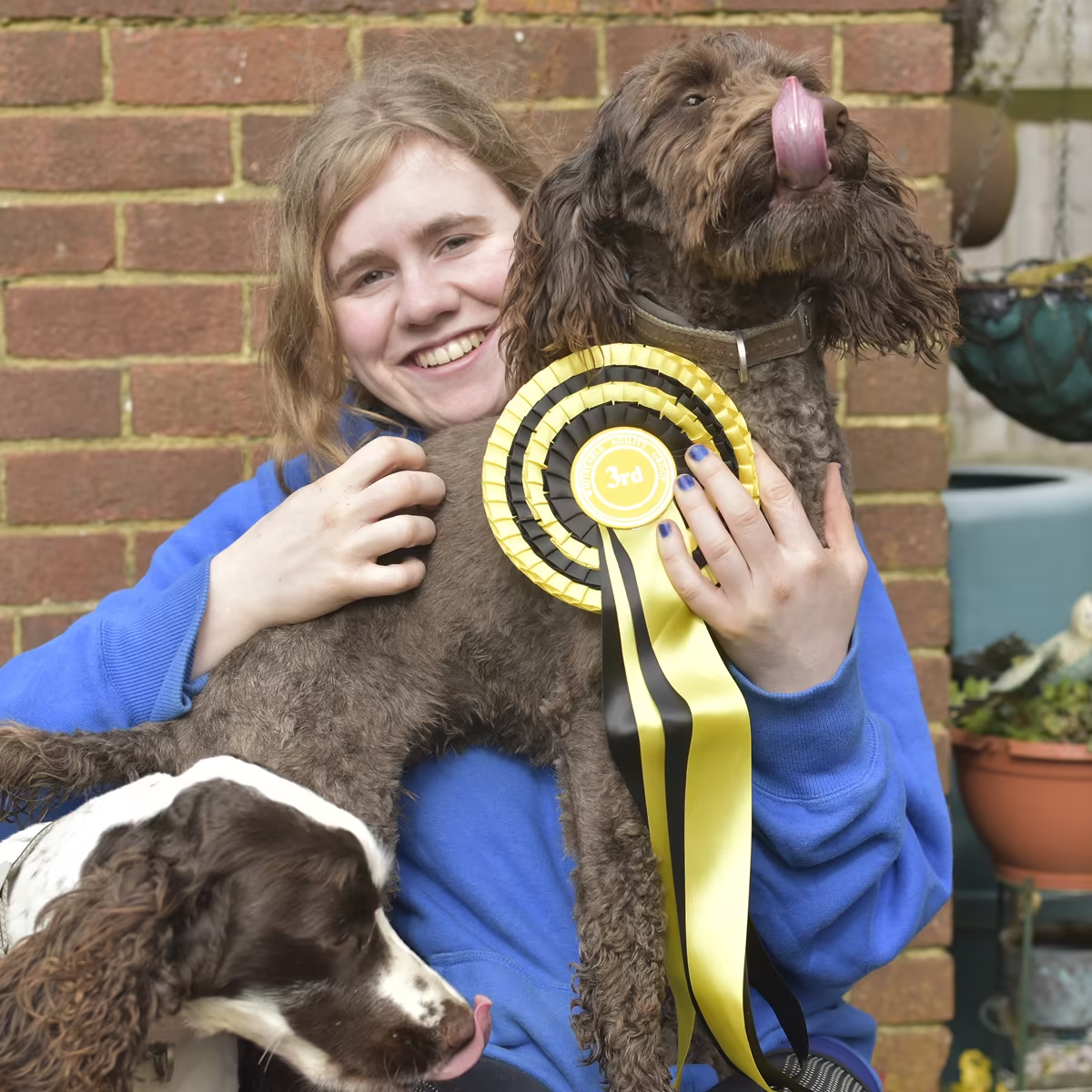
AKC CGC Foundation Pathway


The AKC Canine Good Citizen (CGC) certification is the gold standard for well-mannered dogs. Our program builds every skill your puppy needs to pass the CGC test.

AKC Canine Good Citizen
Official AKC logo. Nationally recognized proof of training. Required by many housing communities and prerequisite for therapy dog work.
CGC Foundation Pathway
Custom program badge. Even if testing isn’t your goal, these are the behaviors every dog should master.
Why early socialization matters: Between 3-14 weeks, your puppy’s brain is neurologically primed to accept new experiences. After this window closes, fear-based behaviors become permanent without intensive intervention.
How We Work Together to Build Your Puppy’s Confidence
Transparency at every step ensures trust

Assessment & Goal Setting
30-minute in-home evaluation. We observe your puppy’s behavior, note triggers and strengths, and discuss your goals.

Personalized Curriculum Design
Training activities align with your puppy’s energy level, breed traits, and learning pace. High-energy breeds get movement-based drills. Shy puppies get slower progressions.

Progress Tracking & Follow-Up
Weekly email check-ins document progress and adjust training. Optional refresher sessions keep momentum strong.
Complimentary 30 min in-home visit
The Marquis Dog Training Puppy Playbook

The Marquis Dog Training Puppy Playbook
Every puppy training question Kansas City families ask our trainers — answered the way he answers them in your living room. No accordions, no fluff, just the playbook he uses in every puppy program.
The Best Methods for Puppy Training
Marquis Dog Training builds every puppy program on three methods that consistently produce calm, confident dogs: positive reinforcement, threshold-based exposure, and household consistency. Positive reinforcement means your puppy earns rewards — food, play, praise, or access to what they want — for behaviors you want to see again. Threshold-based exposure means introducing new people, dogs, sounds, and environments at a distance and intensity your puppy can handle without panicking, then closing the gap as confidence grows. Household consistency means every person in your home uses the same cues, the same rules, and the same response to the same behavior. These three methods are the foundation of our trust-first approach, and they outperform force-based training every time — your puppy learns faster when they feel safe, and the skills stick longer when they’re built on trust instead of fear.
The First Commands Every Puppy Should Learn
The first four skills our trainers teach every puppy, in order, are name recognition, sit, recall (come), and a release word. Name recognition is the foundation of everything else — your puppy needs to look at you when you say their name before any other cue will work reliably. Sit is the universal default behavior, useful at doors, before meals, during greetings, and as a quick reset when your puppy gets overstimulated. Recall is the most important safety command your puppy will ever learn, which is why we start it indoors with high-value rewards long before testing it in the yard or on a walk. A release word — “okay,” “free,” or “all done” — tells your puppy when a behavior is finished, which prevents the confusion of a sit that never officially ends. Down, stay, leave it, and loose-leash walking come next, but these first four are what every Marquis Dog Training puppy program builds on.
How to Potty Train a Puppy
Potty training a puppy works when you control three things: schedule, supervision, and reinforcement. Feed your puppy at consistent times each day, and take them outside immediately after waking, eating, drinking, playing, and every one to two hours otherwise. Pick one potty spot in the yard, use a consistent cue like “go potty” the moment they start, and reward heavily the second they finish. When you can’t actively supervise, your puppy belongs in a crate or a small confined space — not loose in the house where accidents become invisible practice. Clean every accident with an enzymatic cleaner so the scent doesn’t pull your puppy back to the same spot. Marquis Dog Training puppies typically reach daytime potty reliability within about two weeks of consistent practice, and overnight reliability usually follows by 16 weeks when bladder control matures. For a deeper walkthrough, see our potty training solutions page.
What to Do When Your Puppy Isn’t Responding
When a puppy stops responding to training, the cause is almost always one of four things, and our trainers troubleshoot them in this order. First, the puppy is over-threshold — too tired, too stimulated, or too stressed to learn. Solution: end the session, give them a nap, and try again later. Second, the reward isn’t valuable enough for the environment — kibble works on the kitchen floor but fails at the park. Solution: use real meat, cheese, or whatever your puppy will work hardest for. Third, the criteria jumped up too fast — you went from sit in the living room to sit at the front door with the leash on in one step. Solution: go back to the last spot where they were succeeding and build forward in smaller increments. Fourth, the cue means something different to the puppy than it does to you. Solution: stop repeating the word, lure the behavior, and re-pair the cue from scratch. Puppies under six months also have very short attention spans, so a two-minute session that ends on a win is worth more than a fifteen-minute session that ends in frustration.
How to Effectively Socialize a Puppy
Effective puppy socialization is the quality of exposure, not the quantity. Between 3 and 14 weeks, your puppy’s brain is neurologically primed to file new experiences as “safe” — but only if those experiences are paired with calm, positive associations. The goal is not to introduce your puppy to 100 dogs and 100 people; the goal is to introduce them to enough variety — different ages, sizes, surfaces, sounds, hats, beards, wheelchairs, umbrellas, kids, other species — that nothing surprises them later. Quality matters more than quantity: one calm, positive interaction with a well-behaved adult dog is worth more than ten chaotic puppy-park encounters where your puppy gets bullied or overstimulated. Watch your puppy’s body language. If they’re soft, curious, and recovering quickly between novelties, you’re doing it right. If they’re hiding, freezing, or shaking, you’re past their threshold and need to back off. Our socialization solutions page goes deeper on this — it’s the single most time-sensitive skill in any puppy program.
Common Mistakes to Avoid in Puppy Training
The five most common puppy training mistakes our trainers see in Kansas City homes are repeating cues, training in environments that are too distracting too soon, punishing behaviors the puppy doesn’t understand yet, skipping the critical 3-14 week socialization window, and being inconsistent across family members. Repeating a cue — “sit, sit, sit, SIT” — teaches your puppy that the word doesn’t mean “do it now,” it means “do it eventually.” Working in high-distraction environments before basic skills are solid sets your puppy up to fail and you up to get frustrated. Punishing a puppy for chewing, barking, or having an accident without first teaching the alternative behavior damages trust and rarely changes the behavior. Skipping socialization during the critical window creates fear-based behaviors that take months or years to undo. And inconsistency across family members is the quiet killer of every puppy program — if one person allows jumping and another corrects it, your puppy learns nothing except that the rules are unpredictable. Pick the rules, write them down, and make sure everyone follows the same script.
How Often to Train Your Puppy Each Day
Puppies learn best in short, frequent sessions — three to five sessions per day of three to five minutes each is far more effective than one long session. Puppy brains are still developing, and attention spans are measured in minutes, not hours. Built-in training moments work even better than scheduled sessions: ask for a sit before every meal, a name response before opening the back door, a brief leash check-in during walks. Across an average day, most Kansas City puppy owners in our program log 20 to 30 minutes of total training time without ever sitting down for a formal session. Sleep matters just as much as training — puppies under 16 weeks need 18 to 20 hours of sleep per day, and an overtired puppy looks exactly like a “bad” puppy. If your puppy seems to get worse as the day goes on, the answer is usually more naps, not more training.
Tools and Supplies You Actually Need for Puppy Training
The puppy training supplies that actually matter are a properly sized crate, a six-foot flat leash, a flat collar or well-fitted harness, a treat pouch you can wear hands-free, high-value training treats, an enzymatic cleaner for accidents, and a few enrichment items like a snuffle mat, lick mat, or food puzzle. The crate should be just large enough for your puppy to stand, turn, and lie down — too big and it stops working as a potty training tool. Skip retractable leashes; they teach pulling and offer no real control. For treats, soft and pea-sized works best so your puppy can chew and reset quickly. Marquis Dog Training keeps the gear list deliberately simple because most puppy training problems are solved with timing, consistency, and clear communication — not gadgets.
How to Correct Bad Behavior in a Puppy
The trust-first way to correct bad behavior in a puppy is to interrupt, redirect, and reinforce the alternative — not to punish. If your puppy is chewing a shoe, calmly take the shoe, hand them an appropriate chew, and reward when they take it. If your puppy is jumping on people, withhold attention until all four paws are on the floor, then reward the calm behavior. If your puppy is barking for attention, wait for a pause and reward the quiet. If your puppy is mouthing or biting, end the play, hand them a chew toy, and resume play only when they take the appropriate item. Every “bad” behavior is your puppy practicing something — your job is to make the right behavior easier, more rewarding, and more available than the wrong one. Yelling and physical corrections damage trust and often make the underlying behavior worse by adding anxiety to the picture. If a behavior feels bigger than this — resource guarding, reactivity, fear-based biting — that’s a sign to bring in a Marquis trainer for a full behavior assessment rather than troubleshooting alone.




AI Summary
The reviews for the training service highlight a number of strengths, particularly the effectiveness of the training methods and the positive transfor…
Powered by Marquis Dog Training

Our promise is to treat
every dog like our own
“Using Trust-First method, we focus on understanding, consistency, and positive results, so your dog feels confident and your home feels calm.”
Complimentary 30 min in-home visit

Benny S.
Founder
Our puppy trainers come to you across Kansas City Metro cities
Frequently Asked Questions About Puppy Training in Kansas City
What is included in your Puppy Training Program in Kansas City?
The Puppy Training Program in Kansas City focuses on every early‑life skill your puppy needs: bite inhibition, safe socialization, potty training and crate mastery, loose‑leash walking, and core obedience commands like sit, down, stay, and come. Each plan is delivered with a trust‑first, positive reinforcement approach so your puppy learns to listen because they feel safe and understand you, not because they are pressured or intimidated.
When should I enroll my puppy in a starter puppy training program?
Starter puppy training can begin as early as 8 weeks, right when your puppy comes home. The critical socialization window runs roughly from 3–14 weeks; during this time your puppy’s brain is primed to accept new experiences, and a structured puppy training program helps prevent fear‑based behaviors that are much harder to fix later.
Do I need in‑home training, puppy obedience classes, or Board & Train?
All three formats teach the same puppy training fundamentals—socialization, manners, and early obedience—but the setting is different. In‑home sessions are best if you want fully customized coaching in your own living room, small‑group puppy obedience classes are ideal for structured socialization on a budget, and Board & Train gives your puppy 2–3 weeks of daily work plus follow‑up sessions to transfer skills back to you.
What puppy training fundamentals do you focus on in the first few weeks?
Early sessions build the core puppy training fundamentals: controlling bite pressure through play, pairing new people, dogs, sounds, and surfaces with positive experiences, and creating reliable potty and crate routines. At the same time, your puppy begins starter puppy training for leash focus (“watch me,” “heel”) and simple obedience so they can settle when asked instead of bouncing off the walls.
How fast will I see results from your puppy training program?
Most families notice changes from the Puppy Training Program in Kansas City within the first week—better name recognition, calmer crate time, and clearer communication. With consistency, many puppies reach daytime potty reliability within about two weeks and move toward outdoor obedience around weeks 6–8, while full mastery of skills usually develops over 8–12 weeks.
Is your puppy training near me available across the Kansas City metro?
Yes. The in‑home puppy training program serves families across the Kansas City metro, so your puppy can learn in the exact environment where they live every day. That means front‑door manners, neighborhood walks, and crate routines are all tailored to your home, not a generic classroom.
How does the AKC CGC foundation pathway fit into your puppy training program?
Your Puppy Training Program in Kansas City is built to feed directly into an AKC Canine Good Citizen (CGC) foundation pathway, covering loose‑leash walking, polite greetings, handling, reliable sit/down/stay, recall, neutral reactions to other dogs, and calm response to distractions. Even if you never take the CGC test, these CGC‑level manners become the long‑term standard for how your dog behaves at home and in public.
Can shy, nervous, or reactive puppies still succeed in this puppy training program?
Yes. For sensitive puppies, the program uses threshold‑based behavior work—training at a distance where your puppy can stay calm, then slowly closing that gap with rewards and encouragement. This approach turns puppy training fundamentals into confidence‑building reps so shy or anxious puppies learn the world is safe without being flooded or forced.
How do you support busy families so they can follow through between sessions?
The Puppy Training Program in Kansas City is designed for real life, with evening and weekend options plus video check‑ins to keep momentum when work or kids’ schedules get hectic. You’ll learn how to turn everyday routines—meals, walks, and playtime—into short, effective training reps so puppy training near me feels like a lifestyle, not a separate chore.
Will my puppy only listen when I have treats in my hand?
Treats are used early to teach brand‑new behaviors quickly, but the progression moves from food lures to intermittent rewards and then to “life rewards” like access to meals, going outside, or starting play. By the end of the puppy training program, your dog understands that listening is part of how your family operates, and treats become a tool for sharpening skills in harder, more distracting environments—not a requirement every time you give a cue.
Ready for a calmer, happier home?
Let’s start with a complimentary in-home assessment. Please fill out our form so we can understand your dog’s needs and create a custom training plan.
Or call us:

We will help you choose the right program.
Book your assessment
"*" indicates required fields