
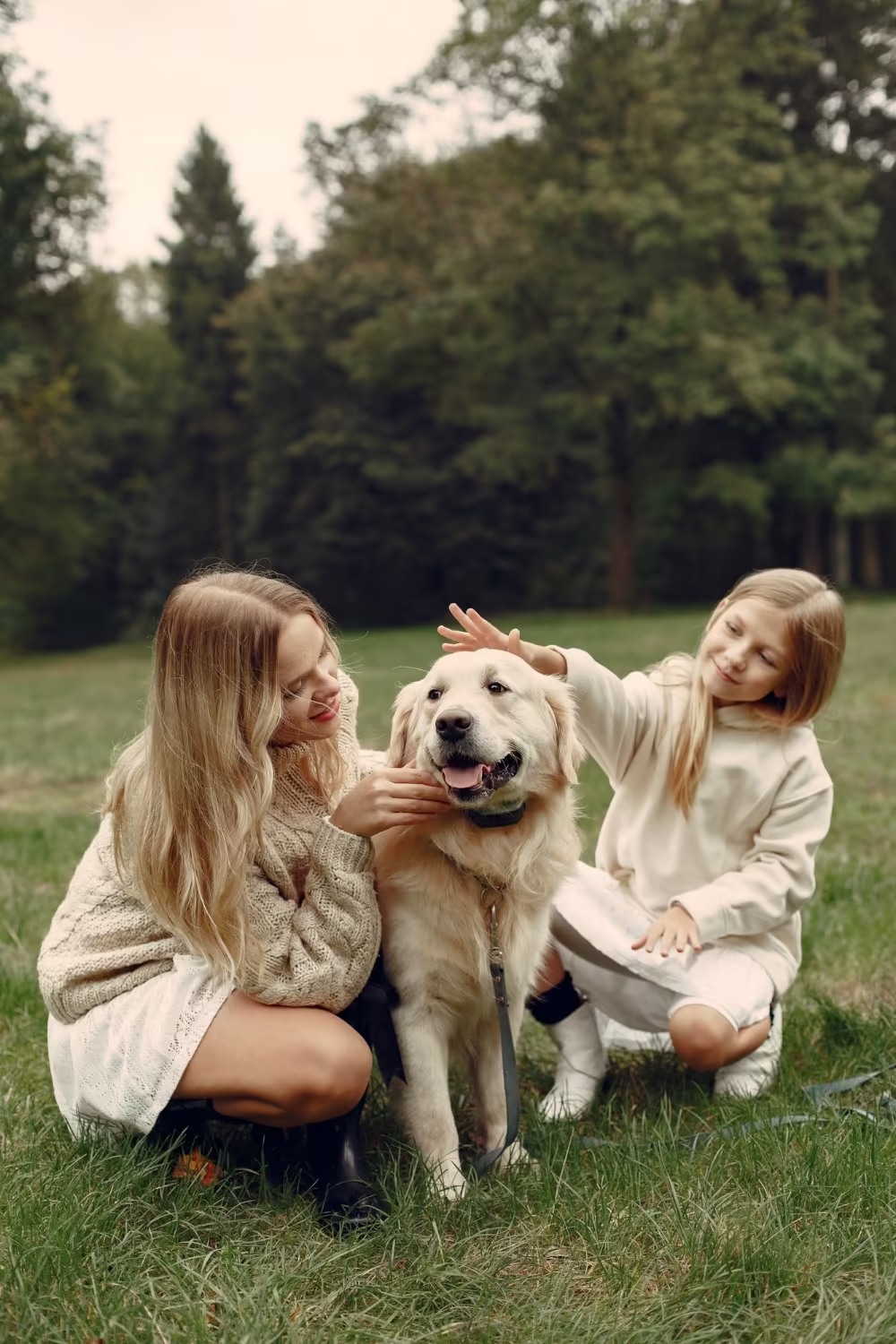
Golden Retrievers are among the most popular family dogs for good reason: they’re intelligent, loving, and genuinely eager to please. These qualities make them excellent candidates for training, but they also come with breed-specific needs and challenges. A Golden Retriever puppy with proper training becomes an incredibly well-behaved, loyal companion, while one without guidance can develop frustrating habits like excessive jumping, destructive chewing, and stubbornness despite their natural intelligence. This complete guide covers everything a first-time Golden Retriever owner needs to know: breed-specific temperament traits, the critical socialization period, step-by-step training methods that align with how Golden Retrievers learn, and proven techniques to prevent common behavior issues before they start. Whether you’re bringing home your first Golden Retriever puppy or you’re an experienced dog owner new to the breed, you’ll discover exactly how to raise a confident, well-trained, happy dog.
Understanding the Golden Retriever Temperament
Before you start training, you need to understand how Golden Retrievers are wired. This breed was originally developed to retrieve game from water—specifically waterfowl. That history shapes every aspect of their behavior.
Intelligence and Eagerness to Please
Golden Retrievers are incredibly smart. They’re ranked among the top-five most intelligent dog breeds. They genuinely want to understand what you’re asking and make you happy. This is a huge advantage in training—your Golden Retriever puppy will actively work to figure out what earns your approval.
However, this intelligence also means they can get bored easily. A bored Golden Retriever puppy becomes destructive. They need mental stimulation as much as physical exercise.
Energy Level and Exercise Needs
Golden Retrievers have moderate-to-high energy. Your puppy will want to run, swim, play, and explore constantly. Many owners mistake a high-energy, under-exercised Golden Retriever for a poorly trained dog. You cannot train away the need for exercise. A Golden Retriever puppy needs 30-60 minutes of exercise daily (as they grow, this increases).
Without adequate exercise and mental stimulation, even the best-trained Golden Retriever will develop frustration-based behaviors like destructive chewing and excessive barking.
Mouth-Oriented Behavior
Golden Retrievers were bred to carry things in their mouths. Your Golden Retriever puppy will naturally want to pick things up, carry them, and mouth them. This isn’t aggression or destructive behavior—it’s breed instinct.
You’ll redirect this mouth-orientation toward appropriate toys rather than trying to eliminate it. A Golden Retriever with a mouth full of their favorite toy is a happy Golden Retriever.
Sensitivity and Empathy
This is one of the most beautiful traits of the breed. Golden Retrievers are naturally attuned to human emotion. They want to comfort you and make you happy. This means harsh corrections or punishment are particularly damaging to Golden Retrievers. They internalize your disappointment deeply.
For training, this means positive reinforcement is especially effective with Golden Retrievers. They respond magnificently to praise, encouragement, and rewards.
Critical Socialization for Golden Retriever Puppies
Golden Retrievers are naturally social and friendly, but proper socialization still matters tremendously. Without it, even a friendly breed can develop anxiety or fearfulness.
The Socialization Window (5-16 Weeks)
This is the critical period when your Golden Retriever puppy’s brain is most plastic (changeable). Experiences during this window shape their adult temperament.
What to Expose Your Puppy To:
People: Different ages, genders, and appearances. Children are especially important since Golden Retrievers become family dogs.
Environments: Parks, busy streets, wet grass, stairs, tile floors, vehicles, vet clinics, pet stores.
Sounds: Vacuum cleaners, traffic, thunderstorms, fireworks (recordings), loud people.
Other Animals: Other dogs (vaccinated and friendly), cats, small animals if the puppy will be around them.
How to Socialize Safely:
- Keep sessions positive and brief
- Let your puppy approach new things at their own pace (don’t force)
- Reward calm behavior with treats and praise
- Avoid high-risk areas (dog parks, unknown dogs) until vaccinated
- Never punish fearfulness—it reinforces the fear
- Expose your puppy to variety, not just one friend’s dog or one park
Golden Retrievers are generally social, but proper socialization creates confident adults who are comfortable in any situation.
Our puppy socialization program includes breed-specific strategies for Golden Retrievers to ensure they develop into well-adjusted, confident adults.
House Training Your Golden Retriever Puppy
Golden Retrievers are intelligent and eager to please, which makes house training relatively straightforward. However, patience is still required—puppies have limited bladder control.
The Basic Protocol:
- Establish a potty schedule: Take your puppy outside:
- First thing in the morning
- After meals (usually 15-30 minutes after eating)
- After play or excitement
- Before bedtime
- Every 2-3 hours during the day
- Choose a potty spot: Always take your puppy to the same area. The familiar scent encourages them to go.
- Use a marker and reward: When your puppy goes outside, immediately say “Yes!” and give a high-value treat. Your puppy learns: outside pee/poop = treats and praise.
- Supervise constantly indoors: Until house trained, your puppy should always be:
- In sight
- On a leash in the house
- In a confined space (crate or small room) when unsupervised
- Never punish accidents: If you find an accident after the fact, there’s nothing you can do except clean it thoroughly with enzymatic cleaner. Punishing teaches your puppy to be afraid of you, not to hold it.
- Manage the diet: Feed on a consistent schedule. Predictable food in = predictable elimination.
Timeline: Most Golden Retriever puppies are reliably house trained by 4-6 months, though some take longer. Consistency from all family members is crucial.
Teaching Core Obedience Commands
Golden Retrievers love learning and earning praise. Teaching obedience is actually enjoyable for them.
Sit (Foundation Command)
Start in a quiet room. Hold a treat near your puppy’s nose, move it above their head. As their head follows the treat, their rear naturally sits. The moment their bottom touches the ground, say “Yes!” and give the treat.
Repeat daily until your puppy sits reliably on cue. This is your foundation command—many other commands build from “sit.”
Come (Recall)
This is critical for safety. Make coming to you rewarding:
- Use high-value treats (reserved only for recall training)
- Practice in low-distraction environments first
- Reward every successful come, even if it takes them a while
- Build distance gradually
Many owners make the mistake of only calling their dog when it’s time to end fun activities (leaving the park, bedtime). Make coming to you the best thing that happens. Our obedience training program specializes in building reliable recall.
Leave It (Safety Command)
Golden Retrievers have a drive to carry things in their mouths. “Leave it” can save your puppy’s life (if they find something dangerous).
- Hold a treat in your closed hand
- Your puppy will try to get it
- When they step back, say “Yes!” and reward with a different treat
- Gradually increase the value of what they’re leaving
Down and Stay
These commands teach impulse control. Start with down (reward your puppy for lying down), then gradually extend duration before rewarding.
Preventing Breed-Specific Behavior Issues
Excessive Mouthing and Chewing
Golden Retrievers naturally mouth, but puppies especially need to learn bite inhibition and that only toys are appropriate chewing objects.
- Provide appropriate chew toys (Kongs, rope toys, durable chew toys)
- When your puppy mouths your hand during play, yelp and stop playing
- Redirect mouthing to a toy: “You want to chew? Here’s your toy.”
- Never hand-wrestle or encourage mouthing games
Jumping on People
Golden Retrievers jump to get attention and because they’re excited. Prevent it by:
- Teaching “sit” as a greeting behavior
- Requiring a sit before any interaction
- Ignoring jumping (turn away, no eye contact, no talking)
- Rewarding calm behavior
Destructive Behavior
Usually caused by boredom, excess energy, or anxiety. Prevention:
- Exercise and mental stimulation daily
- Provide appropriate outlets (puzzle toys, chew toys)
- Crate train for safe containment when unsupervised
- Don’t leave alone for excessive periods
Our puppy training program includes guidance on preventing these common Golden Retriever behaviors before they start.
Key Takeaways
Golden Retrievers Are Intelligent and Eager to Please:
- They respond excellently to positive reinforcement
- They need mental stimulation as much as physical exercise
- Harsh corrections damage their sensitive nature
Socialization Shapes Adult Temperament:
- Expose to variety: people, environments, sounds, animals
- Keep sessions positive and brief
- Don’t force—let your puppy approach new things
- The 5-16 week window is critical
House Training Requires Patience and Consistency:
- Establish a potty schedule (outside after meals, play, sleep)
- Reward outside elimination
- Supervise constantly until trained
- Never punish accidents
Prevention Is Easier Than Correction:
- Provide appropriate outlets for mouthing and chewing
- Teach “sit” as replacement for jumping
- Exercise prevents boredom-based destructive behavior
- Consistent training from all family members
Get Expert Golden Retriever Training Guidance
Golden Retrievers are wonderful dogs, and proper training from puppyhood makes all the difference. Our trainers have extensive experience with this breed’s unique needs and temperament.
If you’re raising a Golden Retriever puppy, our puppy training program is specifically designed to help you build the foundation for a well-behaved, confident adult dog. We provide personalized guidance for this breed’s specific challenges and strengths.
FAQ: Golden Retriever Puppy Training Questions
Q: How much exercise does a Golden Retriever puppy need?
A: It depends on age, but as a general rule, puppies need about 5 minutes of exercise per month of age, twice daily. So a 3-month-old puppy needs about 15 minutes twice daily. Avoid intense exercise (jumping, running on hard surfaces) until growth plates close at 12-18 months. Swimming is excellent for Golden Retrievers at any age.
Q: Are Golden Retrievers hard to train?
A: Not at all. Golden Retrievers are among the easiest breeds to train because they’re intelligent and eager to please. However, they can be stubborn if bored or unmotivated. They need consistent training and positive reinforcement. Harsh corrections backfire with this sensitive breed.
Q: When should I start training my Golden Retriever puppy?
A: Immediately. You can start basic obedience (sit, come, leave it) as early as 8 weeks. Puppies are little sponges during the socialization period. Early training prevents bad habits from forming and capitalizes on the natural learning ability of puppies.
Q: Do Golden Retrievers need professional training?
A: Not necessarily, but many first-time owners benefit from guidance. Golden Retrievers are trainable without professional help, but professional guidance accelerates progress and prevents mistakes. Many owners find group classes or in-home training invaluable for learning proper techniques.
Q: How long does it take to house train a Golden Retriever?
A: Most Golden Retrievers are reliably house trained by 4-6 months with consistent training. Some take longer. Consistency from all family members and a predictable schedule are key. Never punish accidents—praise successes instead.
Q: My Golden Retriever puppy is very mouthy. Is this normal?
A: Absolutely. Golden Retrievers were bred to carry things in their mouths. Mouthing is normal puppy behavior. Redirect it to appropriate toys, teach “leave it,” and practice bite inhibition. This doesn’t mean your puppy is aggressive—they’re just learning what’s appropriate to mouth.
About Marquis Dog Training: Golden Retrievers are one of our favorite breeds to work with. Their intelligence and eagerness to please make training enjoyable for both dog and owner. Our Trust-First approach brings out the best in Golden Retrievers while building strong, respectful relationships.