
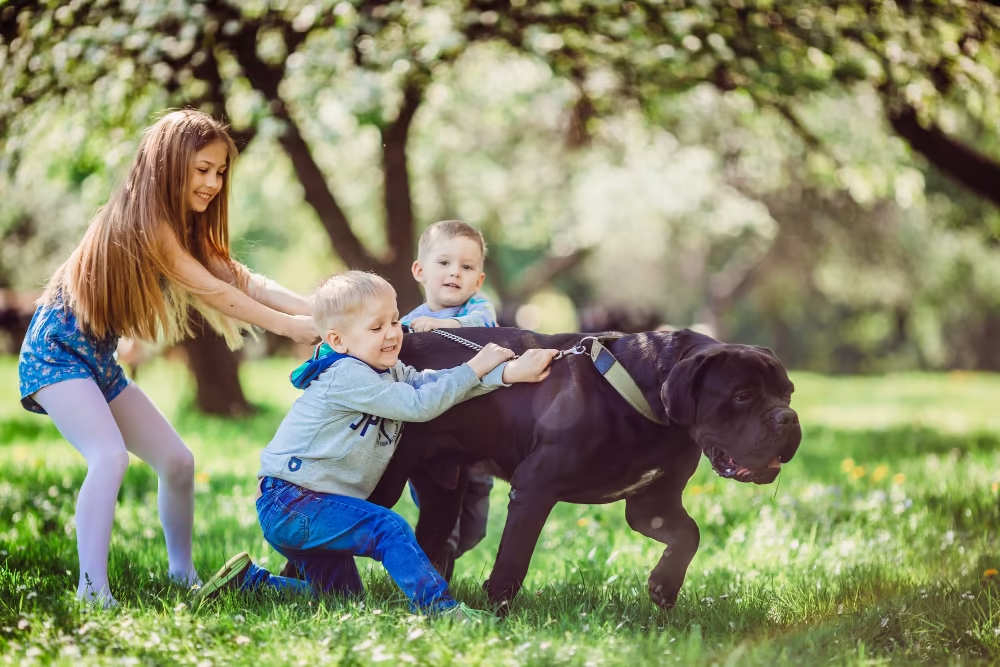
Is your dog greeting your guests by launching themselves at them like an overexcited furball? You’re not alone. Jumping on people is one of the most common behavior issues dog owners face, and while it might seem cute when your puppy does it, it becomes problematic fast. The good news? This behavior is completely fixable with the right training approach. In this guide, you’ll discover why dogs jump, what makes them keep doing it, and most importantly, practical, humane techniques you can start using today to teach your dog that four paws on the floor equals the best reward ever. Whether you’re dealing with a new puppy or an adult dog with deep-rooted jumping habits, these positive reinforcement methods will help you create calm, confident greetings that make hosting guests actually enjoyable.
Why Dogs Jump on Guests
Understanding why your dog jumps is the first step toward fixing the behavior. Dogs don’t jump to be disrespectful or dominant—a common misconception. Instead, they jump for two main reasons: seeking attention and excitement.
When your dog jumps and you react—even by saying “no” or pushing them away—you’re giving them exactly what they want: attention. Your dog’s brain registers that jumping = interaction with their favorite human, so they repeat it. This is especially true if jumping was rewarded in the past with attention, play, or excited reactions. Even well-meaning guests who pet the jumping dog are reinforcing the very behavior you’re trying to eliminate.
Over-excitement is the second culprit. Dogs communicate differently than humans. For your dog, jumping is a natural greeting that brings their face closer to yours—a sign of affection and closeness in dog communication. When you’re gone all day and finally come home, or when an exciting guest arrives, your dog is so happy they can’t contain themselves.
The key insight: Jumping isn’t a dominance issue or a sign of bad manners. It’s a learned behavior that works for your dog because it gets a reaction. Once you remove the reward (attention), your dog will naturally stop jumping because there’s no reason to keep doing it.
The “Dramatic Exit” Method: Breaking the Jumping Cycle
This is the most critical and effective technique for eliminating jumping. The concept is simple but requires consistency: when your dog jumps, you immediately disengage and remove all attention. No interaction whatsoever.
Here’s how it works:
- The moment your dog jumps, stop everything. No talking, no eye contact, no pushing them off. (Pushing them off counts as attention!)
- Walk away. Turn around and move to another room or turn your back completely. Make it clear that interaction is over.
- Wait for calm. Wait until your dog has stopped all attention-seeking behavior (jumping, pawing, barking) AND has been calm and quiet for a full 2 minutes.
- Reward the calm. After those 2 minutes of peace, return and give calm attention. Speak softly, use slow pets, and keep your energy low.
- Repeat. If your dog jumps again during your calm interaction, immediately repeat the dramatic exit.
The magic happens because your dog learns a crucial lesson: jumping makes people disappear, but calm behavior brings people back. This method works because it removes the very thing your dog is seeking—your attention and interaction.
Example scenario: Your friend Sarah arrives and your 65-pound Golden Retriever launches at her. Instead of saying “Get down!” or gently pushing the dog away, Sarah freezes, makes no eye contact, and walks backward into the kitchen. Your dog follows, jumping repeatedly. Sarah stands still and ignores the dog completely for 2 minutes until the dog gives up and lies down. Only then does Sarah approach and give calm praise. By the third visit, your dog realizes jumping doesn’t work anymore.
This method is incredibly effective, but it requires your guests to cooperate. Before they arrive, give them a quick explanation of what you’re doing and ask for their help. Most people are happy to comply when they understand why.
Teaching “Sit” and Other Incompatible Behaviors
While the dramatic exit removes the reward for jumping, teaching your dog an incompatible behavior gives them an alternative way to greet people. It’s physically impossible for a dog to jump and sit simultaneously, which makes “sit” the perfect replacement behavior.
Here’s your protocol:
- Practice “sit” heavily during calm moments. Use high-value treats and lots of praise. Your dog should know this command cold before you use it during greetings.
- Before any greeting, ask your dog to sit. This might be before you answer the door, before a guest enters, or before you pet your own dog when you come home.
- Reward calm sitting. When your dog remains sitting during a greeting, praise calmly and use slow, gentle pets. You can pet them under the chin to keep their nose up and front paws on the ground.
- If they break the sit to jump, immediately revert to the dramatic exit. This teaches your dog that only sitting results in the reward of interaction.
An important note: how you greet your dog sets the tone. If you come home with excited energy, your dog will get excited. If you rush to the door enthusiastically, your dog will too. Instead, practice calm arrivals and greetings. This is one of the most overlooked aspects of fixing jumping behavior.
The “Spot Training” Technique
For dogs who need more structure, “spot training” is incredibly effective. This method designates a specific place—a dog bed, mat, or step—as your dog’s greeting spot.
Here’s how to train it:
- Choose your spot and practice heavily with treats when your dog is calm.
- Use a marker word like “spot!” to cue your dog to go to that location.
- Practice daily. Every time any household member enters the house, immediately ask your dog to go to their spot. Only greet them on the spot, not at the door.
- Reinforce constantly. The frequent practice (multiple times daily if you have a busy household) makes this behavior incredibly strong.
- During guest arrivals, ask your dog to go to their spot before the guest even enters. The guest then approaches your dog on the spot and greets them calmly while they’re sitting or lying down.
This technique works beautifully because it redirects your dog’s excitement to a specific location and behavior, removing the opportunity to jump entirely.
Doorbell Desensitization: Changing the Trigger
Many dogs jump especially hard when the doorbell rings because they associate that sound with exciting guests arriving. Desensitize your dog to the doorbell by removing the dramatic significance of that sound.
The doorbell drill:
- Ring the doorbell frequently throughout the day—when no one is arriving. Just ring it randomly.
- Reward calm behavior. When you ring it, immediately give treats if your dog stays calm and sits away from the door.
- Gradually increase the “threat level.” Have family members ring the doorbell as they enter the house, even if they just stepped outside for a moment. This separates the doorbell sound from the arrival of a guest.
- Practice this daily. The more you ring that doorbell without an actual guest arriving, the less emotionally charged it becomes for your dog.
Over time, your dog’s brain stops reacting to the doorbell as a signal for excitement. It becomes just another sound, not a trigger for jumping.
Key Takeaways
Stop Jumping Before It Starts:
- Remove the reward: Stop giving attention when your dog jumps
- Use the dramatic exit consistently—immediate disengagement
- Require calm behavior for 2 minutes before re-engaging
Teach Incompatible Behaviors:
- Train a solid “sit” command
- Use “sit” as a greeting requirement
- Reward calm sitting, not excited jumping
Create Structure:
- Implement spot training for designated greeting locations
- Practice with every household member entering the home
- Desensitize your dog to the doorbell with frequent, non-event ringing
The Golden Rule: Four paws on the floor = reward. Any other position = no interaction. Consistency from every family member and every guest is absolutely essential. One person rewarding a jump can set your training back weeks.
Ready to Enjoy Calm Guest Visits?
Jumping on guests doesn’t have to be your reality. Many dog owners find that these positive reinforcement methods work within weeks when applied consistently. The best part? You’re not punishing your dog; you’re simply teaching them that calm behavior is way more rewarding than jumping.
If you’ve tried these methods and your dog is still struggling with jumping or other greeting behaviors, our Obedience Training Program can help. Our trainers specialize in positive reinforcement techniques and can assess your specific situation to create a customized training plan.
Or if you prefer to work one-on-one in your home, our In-Home Training Sessions allow us to address jumping in the exact environment where it happens—during actual guest arrivals.
Frequently Asked Questions
Q: How long does it take to stop jumping? A: With consistent application of these techniques, most dogs show significant improvement within 2-3 weeks. Complete habit reversal typically takes 6-8 weeks, depending on how long the jumping behavior has been reinforced and how consistently everyone in the household applies the training.
Q: What if my guests won’t cooperate with the training? A: This is a common challenge. Before guests arrive, give them a brief explanation: “When [dog name] jumps, we’re going to completely ignore them—no talking, no eye contact, no pushing away. We’ll only pet them once they’re calm.” Most people are happy to help when they understand the approach. You might also manage the situation by putting your dog on a leash or in a confined area until they calm down.
Q: Can I use a head collar or harness to control the jumping? A: Tools can provide temporary management, but they don’t teach your dog not to jump—they just prevent the behavior in the moment. We recommend using tools (like a short leash) as a safety measure while you’re training, but the real solution comes from teaching your dog what to do instead. Once your dog learns that sitting gets them attention and jumping removes it, you won’t need the tools anymore.
Q: My adult dog has been jumping for years. Is it too late to fix this? A: Absolutely not. Dogs of any age can learn new behaviors, but it may take longer if the jumping has been reinforced for years. Adult dogs often learn even faster than puppies because they have better focus and impulse control. Be patient and consistent, and you’ll see improvement.
Q: What if my dog only jumps on certain people? A: This typically means those people have been reinforcing the jumping (even unintentionally) by responding to it. Ask those specific people to use the dramatic exit method consistently. Once the jumping stops being rewarded, your dog will stop offering it to that person too.
About Marquis Dog Training: We specialize in positive reinforcement training methods that build trust between you and your dog. Whether you’re addressing jumping, leash pulling, or complex behavior issues, our Trust-First approach has helped hundreds of Kansas City families create calm, confident dogs. Schedule your in-home consultation today.