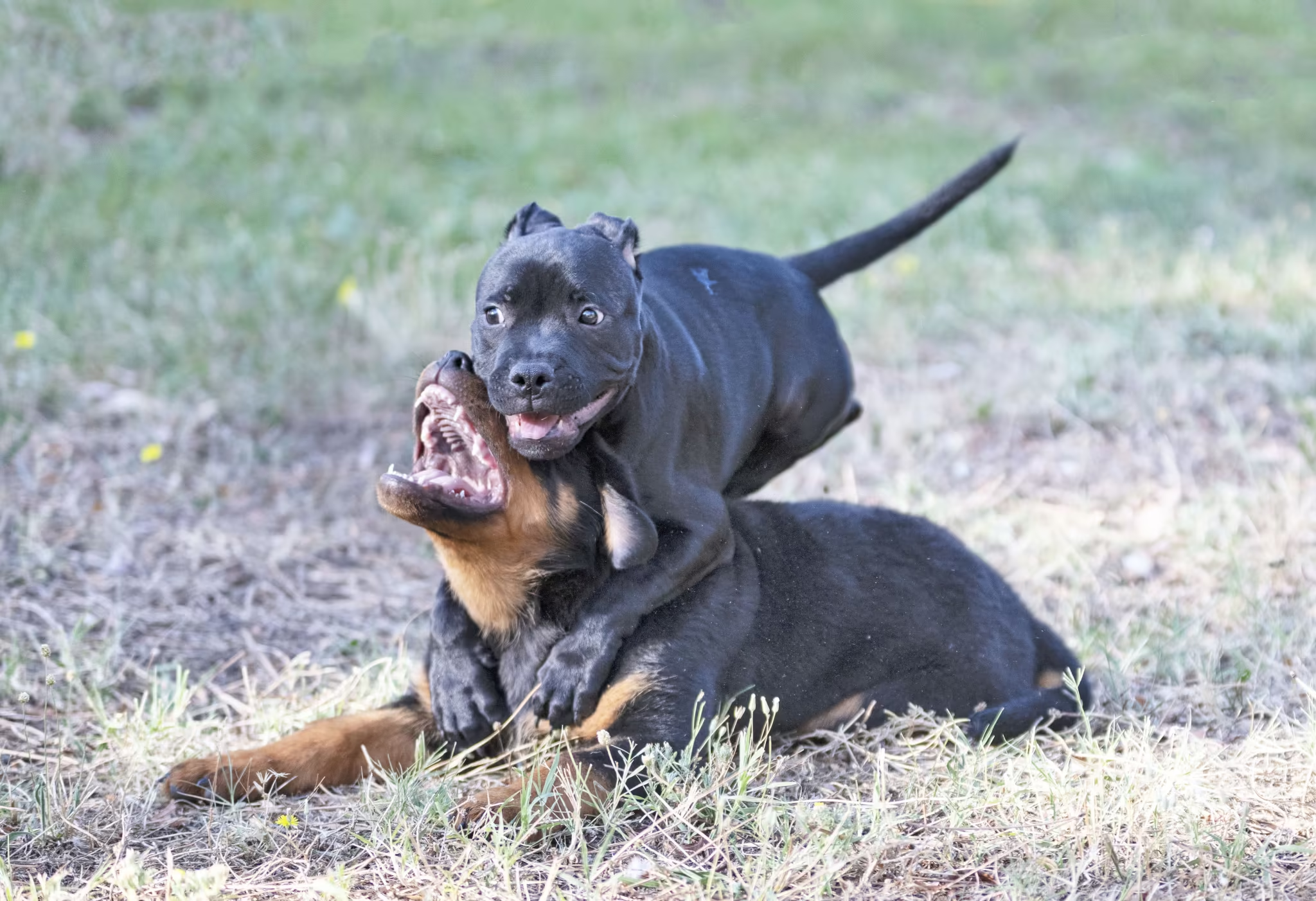
If your dog starts barking, lunging, or pulling the moment they see another dog or person, you’re dealing with reactivity, and it can quickly take over your daily routine.
Walks become stressful instead of enjoyable. You begin avoiding certain streets, parks, or situations altogether. Even basic obedience starts to feel unreliable once distractions appear.
This is one of the most common issues dog owners face, yet it’s often misunderstood.
Reactive behavior is not simply disobedience. It’s a conditioned response that develops over time, usually without the owner realizing it. The longer it continues, the more automatic and intense it becomes.
That’s why structured dog training for reactive dogs in Kansas City is so important. When handled correctly, reactivity can be reduced significantly, allowing your dog to remain calm, focused, and responsive in real-world situations.
Understanding What Reactivity Really Is
Reactivity is an exaggerated response to a trigger. That trigger could be another dog, a person, a moving object, or even a specific environment.
What makes reactivity difficult is that it often happens quickly and feels out of control. One moment your dog is walking calmly, and the next they are fully locked onto something, barking or lunging.
This behavior typically comes from one of three core causes:
- Fear or uncertainty, where the dog reacts to create distance
- Frustration, especially when restrained on a leash
- Overstimulation, where the dog becomes overwhelmed by the environment
In each case, the reaction serves a purpose for the dog. If barking or lunging causes the trigger to go away, or even just creates space, the behavior is reinforced.
Over time, this pattern becomes stronger. The reaction happens faster, with more intensity, and with less warning.
Why Reactive Behavior Gets Worse Over Time
One of the biggest mistakes dog owners make is unintentionally reinforcing the behavior.
For example, if your dog reacts and you immediately turn around or pull away, the dog learns that reacting successfully removes the situation. Even though you’re trying to manage the moment, the dog sees it as a reward.
Other common patterns also contribute to worsening behavior:
- Repeated exposure without guidance, where the dog practices reacting
- Inconsistent handling, where expectations change from one situation to another
- Relying only on treats or distractions instead of structure
- Increasing leash tension, which adds frustration or stress
These small habits add up. Over time, reactivity becomes the dog’s default response.
This is why effective reactive dog training focuses on changing the pattern, not just managing the symptoms.
A Structured Approach to Reactive Dog Training
Improving reactivity is not about forcing your dog into difficult situations. It’s about building control gradually and intentionally.
The process starts with understanding your dog’s threshold, the point at which they can notice a trigger without reacting.
Creating Space to Allow Learning
Training begins at a distance where your dog can stay calm. This is critical.
If your dog is already barking or lunging, they are no longer in a state where they can learn. Creating space allows you to work in a controlled way instead of reacting to the situation.
Building Engagement and Focus
Before asking your dog to ignore distractions, you need to teach them where their attention should go.
This means reinforcing engagement, your dog choosing to focus on you instead of the environment. Without this foundation, progress will be inconsistent.
Gradual Exposure to Triggers
Once your dog can remain calm at a distance, you begin reducing that distance slowly.
This step requires patience. Moving too quickly often leads to setbacks, while controlled exposure builds confidence and stability.
The goal is not to eliminate the presence of triggers, but to change your dog’s response to them.
Interrupting and Redirecting Behavior
If your dog begins to escalate, the reaction must be interrupted early.
Allowing the dog to fully react reinforces the behavior. Proper timing is essential, corrections must happen before the reaction reaches its peak.
This is one of the main reasons many owners struggle on their own. Timing and consistency are difficult without experience.
Training in Real-Life Environments
Perhaps the most important factor is where the training takes place.
Dogs do not automatically transfer skills from one environment to another. A dog that behaves well in a quiet setting may still react in a busy neighborhood.
That’s why in-home dog training in Kansas City is so effective. Training happens during real walks, real encounters, and real situations, where behavior actually matters.
When Reactivity Becomes More Serious
If reactivity is not addressed, it can begin to escalate into more serious behavior.
You may notice that reactions become more intense or happen more quickly. Your dog may start reacting to smaller triggers or struggle to recover after an outburst.
In some cases, this can develop into aggression, especially if the dog feels consistently overwhelmed.
At this stage, working with a dog trainer in Kansas City is essential. Structured guidance ensures that progress is made safely and effectively, without increasing stress or risk.
Why Professional Reactive Dog Training Matters
Reactive behavior is one of the most challenging issues to fix without a clear plan.
Professional reactive dog training in Kansas City focuses on identifying the root cause of the behavior and applying a structured approach that creates lasting change.
This includes:
- Controlled exposure to triggers
- Clear communication and consistent expectations
- Proper timing of corrections and reinforcement
- Gradual progression based on the dog’s comfort level
It also removes guesswork for the owner. Instead of trying different methods without results, you follow a proven system designed to improve behavior step by step.
Dog Training in Kansas City: Real-World Challenges
Kansas City offers a wide range of environments that naturally challenge dog behavior.
From busy parks and walking trails to neighborhoods with constant activity, dogs are exposed to frequent triggers. For reactive dogs, this can quickly become overwhelming.
Without proper training, these situations often lead to frustration for both the dog and the owner.
That’s why dog training in Kansas City must focus on real-world application. Training should prepare your dog for the environments they experience every day, not just controlled settings.
FAQs About Reactive Dog Training
Can reactive dogs be trained successfully?
Yes. With consistent and structured training, most reactive dogs can learn to remain calm and controlled around their triggers. The key is addressing the behavior early and following a clear plan.
How long does it take to see improvement?
Many dogs begin showing improvement within a few weeks, but long-term success depends on consistency and proper handling.
Is reactivity the same as aggression?
No. Reactivity is often based on fear or frustration, while aggression involves intent to harm. However, untreated reactivity can develop into aggression over time.
Should I avoid triggers completely?
Avoiding triggers can help temporarily, but it does not solve the problem. Controlled exposure is necessary for long-term improvement.
Do you offer reactive dog training in Kansas City?
Yes. Dog training for reactive dogs in Kansas City focuses on reducing reactivity, improving control, and creating reliable behavior in real environments.
Conclusion
Reactive behavior can feel overwhelming, but it is not permanent.
With the right structure, consistency, and environment, your dog can learn to respond calmly instead of reacting impulsively. The goal is not just to manage behavior, but to change it in a way that lasts.
Training must happen where life happens. That’s what makes the difference.
Get Professional Help That Works
If you’re struggling with your dog’s behavior, Marquis Dog Training offers professional training programs in Kansas City designed for real, lasting results. Contact us today to get started.