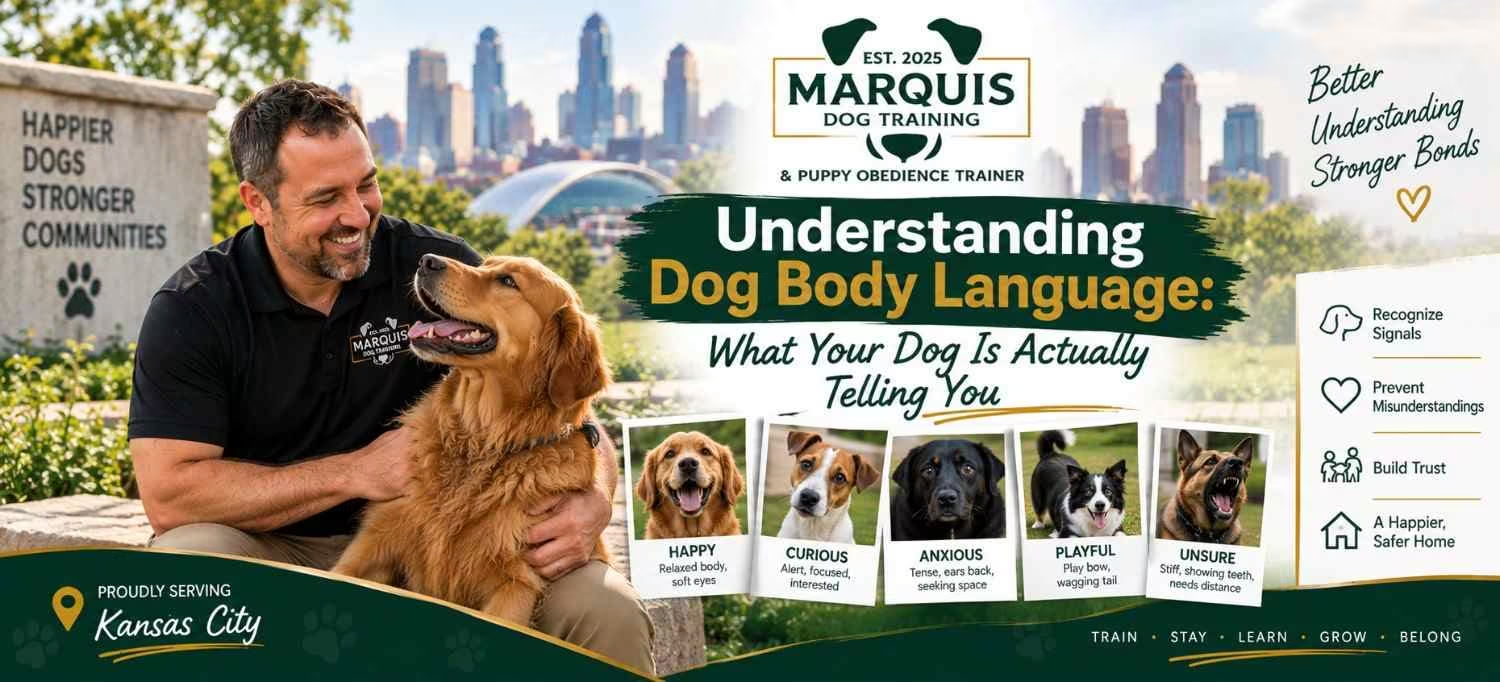
Understanding dog body language is one of the most useful skills any dog owner can build, and it’s also one of the most overlooked. Dogs communicate constantly through posture, facial expression, and movement, long before they ever bark, growl, or bite. Most owners just aren’t taught what to look for. Learning to read these signals doesn’t just prevent problems, it also helps you understand what your dog is experiencing throughout an ordinary day.
This matters more than most people realize. The vast majority of dog bites are preceded by a series of increasingly clear warning signs, not a sudden, unpredictable snap. Dogs rarely go from calm to biting with no communication in between. The signals are almost always there. The challenge is that many of them are subtle, and easy to miss if you don’t know what you’re looking at. Learning even a handful of these signals tends to change how owners experience everyday moments with their dog, from walks to greetings to simple handling around the house.
This kind of body language literacy is also one of the quiet foundations behind good socialization, since safely introducing a dog to new people, places, and other dogs depends on recognizing when they’re comfortable versus when they need more space or a slower pace.
Why Dog Body Language Matters for Everyday Safety
Reading a dog’s body language isn’t just for trainers or behaviorists. It’s a practical skill for anyone who lives with a dog, has kids around dogs, or regularly meets unfamiliar dogs at parks, on walks, or at gatherings. Recognizing early discomfort gives you the chance to remove your dog from a stressful situation, or give a nervous dog space, well before a warning escalates into a bite.
This is especially important in households with children, since kids are far more likely to miss early warning signs and more likely to approach a dog directly during exactly the moment it’s asking for space.
Signs of a Relaxed, Comfortable Dog
Before learning stress signals, it helps to know what calm actually looks like:
- Loose, wiggly body posture with relaxed muscles
- A tail held at a natural height, moving in a loose, sweeping wag
- Soft, relaxed eyes without prolonged staring
- A relaxed, slightly open mouth, sometimes called a “dog smile”
- Easy, fluid movement rather than stiffness
Subtle Stress Signals Most Owners Miss
Long before a dog growls or snaps, they typically show smaller, easy-to-miss signs of discomfort:
- Lip licking or tongue flicking when no food is present
- Yawning outside of tiredness
- Turning the head or body away from a person or another dog
- Showing the whites of the eyes (sometimes called “whale eye”)
- Suddenly scratching, sniffing the ground, or shaking off with no obvious reason
- Holding very still, or freezing, especially around food, toys, or a tight space
These are sometimes called calming signals, a dog’s attempt to de-escalate a situation before it becomes a bigger problem. Best Friends Animal Society notes that dogs often display these subtle behaviors specifically to avoid conflict, which is exactly why they’re worth learning to notice.
Dog Body Language Warning Signs Before a Bite
When early stress signals are missed or ignored, a dog’s communication typically escalates to something more obvious:
- A stiff, rigid body with weight shifted forward
- Intense, prolonged staring at a person, animal, or object
- Raised hackles along the back or shoulders
- Curling the lip or showing teeth
- Low growling or a hard, closed mouth
- Snapping without contact, as a final warning before a bite
It’s worth saying clearly: these are warnings, not misbehavior. A dog offering a growl or a stiff posture is actually doing exactly what you’d want, communicating discomfort before resorting to a bite. Punishing that communication doesn’t remove the underlying stress. It just teaches the dog to skip the warning next time, which is a far more dangerous outcome.
Common Myths About Dog Body Language
- A wagging tail always means a happy dog. Tail position and speed matter. A high, stiff, fast wag can signal arousal or tension, not friendliness, while a low, loose wag usually does mean relaxed and comfortable.
- A dog that looks “guilty” knows it did something wrong. That posture, lowered head, tucked tail, avoiding eye contact, is actually a response to a person’s tone or body language in the moment, not evidence the dog remembers or understands an earlier mistake.
- A dog that licks a child’s face is giving affectionate kisses. Licking, especially rapid or repeated licking, can also be a calming signal used to create distance or diffuse a tense interaction, not necessarily a sign of affection.
How Body Language Changes Across a Dog’s Life
A dog’s baseline body language isn’t static. Puppies are still developing the fine motor control and social experience needed to communicate clearly, which is part of why they sometimes seem to misread other dogs’ signals or send confusing signals themselves. Senior dogs, on the other hand, may develop new stress responses around handling or movement due to arthritis or reduced vision and hearing, even if they were easygoing about the same things for years. Paying attention to a shift in a dog’s normal signals, not just the presence of an alarming one, is often the earliest indication that something in their environment, health, or comfort level has changed.
Reading Body Language in Multi-Dog Households
Body language literacy becomes especially important in homes with more than one dog, since much of the day-to-day communication between household dogs happens through exactly these subtle signals rather than through barking or obvious conflict. A dog that repeatedly turns away, freezes, or leaves the room when another dog approaches is communicating a boundary, and consistently overriding that boundary, by forcing shared space or ignoring one dog’s discomfort, tends to build tension over time rather than resolve it. Learning to recognize these everyday signals is often what separates a multi-dog household that runs smoothly from one where tension keeps resurfacing without an obvious cause.
How to Respond When You See Stress Signals
The right response is almost always the same: create distance and lower the pressure. That might mean stepping back from a dog who’s stiffening near their food, calling a child away from a dog showing whale eye, or ending an interaction with an unfamiliar dog who’s turning their head away repeatedly. Respecting these early signals is one of the simplest ways to build trust with a dog and prevent a situation from escalating further.
Teaching Kids to Read Dog Body Language
Kansas City families with both kids and dogs benefit enormously from teaching children a few basic rules early: ask before petting an unfamiliar dog, avoid hugging or putting a face close to a dog’s face, and give a dog space if it turns away, yawns, or goes still. These are simple concepts that dramatically reduce the risk of a bite, and they work just as well with the family dog as they do with a dog encountered at a park or a friend’s house.
When Professional Support Helps
If a dog is showing frequent stress signals around specific triggers, guests, other dogs, certain handling, that’s usually a sign the underlying issue needs to be addressed directly rather than just managed around. Our Anxiety & Aggression program is built around identifying exactly these patterns and working through them with structured desensitization. For dogs whose stress responses show up mainly around other dogs or unfamiliar situations, our Fear & Reactiveness approach addresses the same root causes with a calm, trust-based process.
Frequently Asked Questions
Is growling always a bad sign?
No. Growling is a normal, healthy form of communication that means your dog is uncomfortable. It should never be punished, since doing so can teach a dog to skip the warning altogether.
Can body language differ between breeds?
Some breed traits, like naturally erect ears, curled tails, or minimal facial wrinkling, can make certain signals harder to read. Context and the overall combination of signals matter more than any single feature.
How can I tell if two dogs playing are actually fighting?
Healthy play usually includes loose, bouncy movement, role reversal, and voluntary breaks. Stiff bodies, one-sided pinning without breaks, and prolonged growling with tense posture are signs to intervene.
Do puppies show the same body language as adult dogs?
Puppies show many of the same basic signals, though their communication skills are still developing, and they may not read or respond to other dogs’ signals as reliably yet.
What should I do if my dog freezes when a child approaches?
Treat a freeze as a clear warning sign. Calmly redirect the child, give the dog space, and avoid forcing further interaction in that moment.
If you want help learning to read your own dog’s signals, or you’re noticing stress responses that seem to be getting more frequent, a complimentary in-home assessment is a good way to get a clear, personalized read on what’s going on.