

Stop Excessive Barking Without Suppression
Quiet, Calm Behavior Training
Transform nonstop barking into peaceful communication, without suppressing your dog’s voice.
The Exhaustion of Constant Barking

Excessive Barking Dog Training – Why It Matters
Why Your Dog’s Barking Feels Never-Ending, And Why It Matters
If your dog barks constantly at noises, people, or when left alone, it can quickly become overwhelming. Working with a dog trainer for excessive barking helps identify the root cause and build calm, reliable behavior that lasts. You’ve tried yelling “quiet,” citronella collars, even shock collars, temporary relief at best, often making things worse. Neighbors complain. Your lease is threatened. You can’t have guests over. The constant noise is affecting your mental health and your dog’s stress levels.
Left unaddressed, excessive barking escalates. Dogs become more reactive, not less. Neighbors file formal complaints. HOAs issue violations. Landlords threaten eviction. And you’re trapped in a cycle of frustration where your dog’s barking controls your entire household, limiting when you can work from home, have company, or simply enjoy peace in your own space.
Common Excessive Barking Challenges:
- Bark Control Training for Alert & Territory Barking – Your dog sounds the alarm at every passerby, delivery driver, or outdoor sound, turning every window into a constant noise trigger you can’t control.
- Dog Barking Solution for Attention-Seeking & Demand Barking – Your dog has learned that barking gets results, your attention, food, playtime, creating a relentless cycle of noise whenever they want something.
- Anti-Bark Training for Frustration & Boredom Barking – Under stimulated dogs bark excessively from pent-up energy or frustration, especially when left alone or confined without adequate mental and physical outlets.
Our Trust-First Excessive Barking Training Approach
How We Stop Excessive Barking Without Breaking Communication
Traditional bark suppression methods like shock collars or punishment don’t address why your dog is barking. At Marquis Dog Training, our professional dog trainer for excessive barking focuses on teaching impulse control, appropriate communication, and calm behavior, addressing the root cause while preserving your dog’s natural alerting instinct when appropriate.
We work in your home and real-world environments where barking happens most, using proven excessive barking dog training methods like desensitization and positive reinforcement to create lasting behavior change.
Our Approach Includes:
- Trigger Identification – Pinpointing exactly what causes dog excessive barking (doorbell, windows, separation, boredom, fear, territorial responses)
- Impulse Control Foundation – Teaching your dog the “quiet” cue and reinforcing calm responses to previously triggering stimuli
- Alternative Behavior Training – Replacing barking with appropriate actions (going to place, bringing a toy, calm alert without sustained noise)
- Environmental Management – Modifying your home setup to reduce visual/auditory triggers while building long-term behavioral change

How Excessive Barking Dog Training Works
How Our Trust-First Method Works
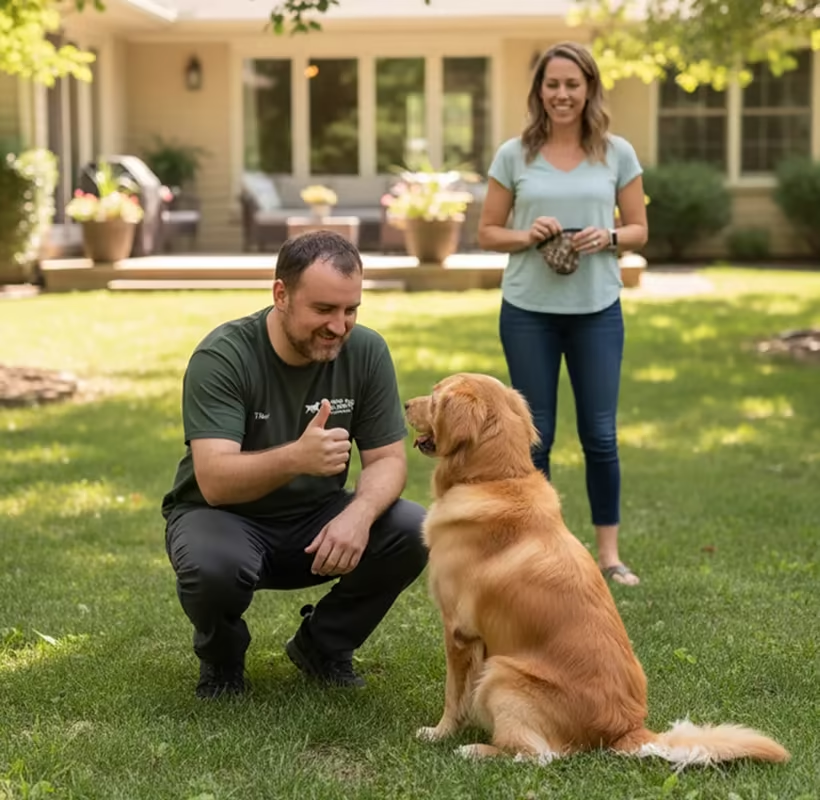
In-Home Assessment
We meet in your home to understand your dog’s history, excessive barking triggers, current behaviors, and your lifestyle. You’ll learn safety basics and simple foundation exercises that set the tone for all future dog training for excessive barking situations.

Foundation Skills at Home
We teach your dog a reliable “quiet” command and impulse control around known triggers. Your dog learns that barking once or twice is acceptable (alert function), but sustained excessive barking isn’t rewarded.

Controlled Exposure Sessions
We systematically expose your dog to their specific barking triggers, doorbell practice, controlled passersby simulations, and noise recordings, building calm responses through gradual excessive barking dog training.

Confidence & Maintenance
We focus on variable triggers, unexpected scenarios, and maintaining calm, quiet behavior during real-life situations (guests arriving, package deliveries, neighborhood activity) to help you consistently stop dog barking.
Outcomes You Can Expect

No More Neighbor Complaints or Lease Violations
your dog’s noise no longer threatens your housing situation or relationships with neighbors

Peaceful Homes Without Constant Noise
Your dog alerts appropriately without sustained, excessive noise

Better Quality of Life for You AND Your Dog
Both of you experience calmer, happier daily life without constant reactive noise.
Complimentary 30 min in-home visit

Key Barking Management
skills we teach
Barking is communication, not disobedience. We identify whether it’s alerting, anxiety, excitement, or boredom, then teach impulse control and calm alternatives that work for everyone around you.

Trigger Identification & Early Recognition
Your dog learns to recognize its own stress signals and you learn to identify triggers before barking escalates into habit.

Alert Bark Modulation
Your dog can alert (appropriate to their role) but learns to quiet on cue instead of escalating into excessive vocalization.

Quiet Cue Reliability
A specific signal means “stop barking now”, taught through positive reward (not punishment) so your dog chooses calm.

Calm Settling in High-Stimulation Moments
Doorbell? Other dogs passing? Squirrel outside? Your dog learns to settle on a mat or in a designated spot instead of reactive barking.

Redirection to Appropriate Activities
When barking urges arise, your dog learns to redirect to toys, chews, or play with you instead of vocalization.
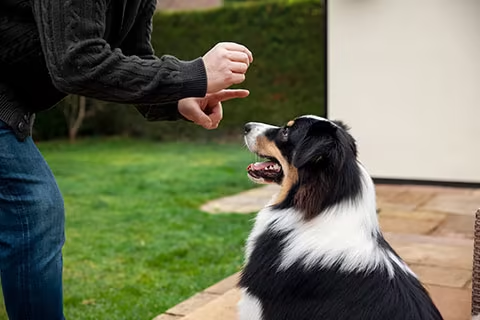
Boredom Prevention Through Enrichment
Your dog learns to engage with appropriate outlets (toys, treats, training games) that satisfy their need for mental stimulation without noise.

Anxiety Management & Confidence Building
For anxiety-driven barking, your dog builds confidence through exposure and desensitization so panic-barking decreases naturally.

Guest & Visitor Protocol
Your dog learns a specific calm behavior during guest arrivals (go to bed, sit, down), replacing reactive barking with predictable responses.

Take our 3-minute survey
so we can tailor your consultation
Trigger Identification & Early Recognition
Your dog learns to recognize its own stress signals and identify triggers before excessive barking escalates into a habit.
Alert Bark Modulation
Your dog can alert appropriately but learns to quiet on cue instead of escalating into excessive barking behavior.
Quiet Cue Reliability
A specific signal means “stop barking now”, taught through positive reward so your dog learns to stop dog barking on cue without punishment.
Calm Settling in High-Stimulation Moments
Doorbell? Other dogs passing? Your dog learns to settle calmly instead of reacting with excessive barking in high-stimulation situations.
Redirection to Appropriate Activities
When barking urges arise, your dog learns to redirect to toys, chews, or play instead of excessive barking.
Boredom Prevention Through Enrichment
Your dog learns to engage with appropriate outlets that prevent boredom-related excessive barking.
Anxiety Management & Confidence Building
Your dog learns to engage with appropriate outlets that prevent boredom-related excessive barking.
Guest & Visitor Protocol
For anxiety-driven barking, your dog builds confidence through structured excessive barking dog training and gradual exposure.
Take our 3-minute survey
so we can tailor your consultation

Why Marquis Dog Training

Certified, experience-backed training
Your trainer is an AKC Canine Good Citizen Evaluator with advanced behavior modification training, he understands canine communication, arousal thresholds, and impulse control at expert level.

Trust-first, lifestyle-aligned approach
We coach your whole family, not just your dog, so your socialization routines fit school runs, work schedules, and weekend adventures, not a rigid class timetable.

In-Home Training for Real Triggers
We train in your space, addressing your dog’s actual triggers with your household routines. This ensures behavior change transfers to real life, not just controlled settings your dog never experiences again.
Complimentary 30 min in-home visit
Success stories
Tips to manage excessive barking in Kansas City
Strategies for peace and neighbor harmony

Identify your dog’s specific barking trigger
Alert barking? Anxiety? Boredom? Excitement? Each type needs a different approach. Keep a log for a few days noting what triggers barking and your dog’s body language. You can’t address what you don’t understand.

Teach a reliable “quiet” cue
When your dog barks, wait for a natural pause, then say “quiet” and immediately reward. Repeat dozens of times. Your dog learns that quiet behavior earns rewards, more effective than yelling or correction.

Manage environmental triggers strategically
If barking increases at certain times, rearrange routines or limit exposure to triggers while training. Close blinds if window barking is an issue. Manage triggers while training the behavior, training takes time.
Ready to rebuild confidence?
Complimentary 30 min in-home visit




AI Summary
The reviews for the training service highlight a number of strengths, particularly the effectiveness of the training methods and the positive transfor…
Powered by Marquis Dog Training
Why Kansas City families trust us for barking solutions

Trigger Identification & Specific Strategies
Barking at the doorbell? Other dogs? Strangers? Each requires different training.

Impulse Control Training That Works
We don’t believe in punishment-based bark correction. We teach your dog that quiet choices earn rewards, treats, praise, play, freedom.
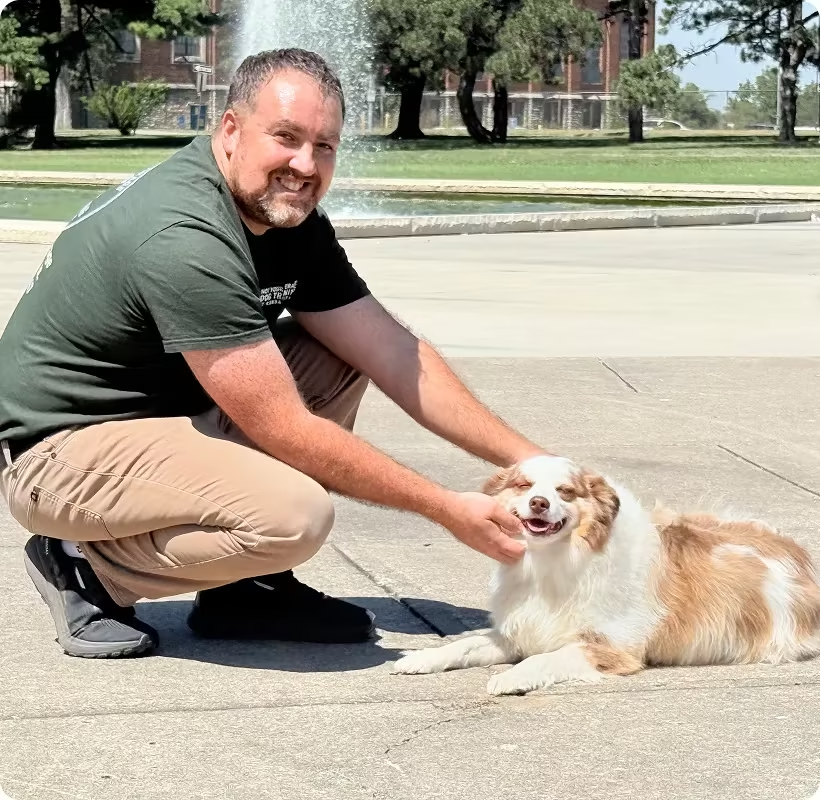
Neighbors & Families Report Peace
Families tell us neighbors stop complaining. More importantly, they actually enjoy their dogs again instead of feeling stressed by constant noise.
What you’ll see in
week one

Reduced Noise Pollution
The constant barking decreases significantly. Silence returns to moments that were previously dominated by excessive vocalization. Your stress levels drop with the volume.
Appropriate Alert Barking
Your dog still alerts appropriately, doorbell, unusual activity, but doesn’t escalate into constant noise. Alert remains alert without becoming obsessive or exhausting.
Neighbor Relationship Improvement
Neighbors stop complaining. Noise complaints end. You’re no longer the “dog problem house” on the street. Your community relationships improve alongside your dog’s behavior.
Restored Home Calm
Your home becomes a peaceful place again instead of a stress zone filled with constant noise. You can focus, relax, and enjoy time with your dog instead of managing constant barking.

Benny S.
Founder
We come to you across Kansas City Metro cities
Frequently asked questions
Will bark collars or ultrasonic devices work faster than training?
Bark suppression devices (shock, citronella, ultrasonic) may temporarily reduce barking through discomfort or fear, but they don’t address why your dog barks, often creating anxiety, increased reactivity, or aggression. Many dogs habituate to devices, requiring increasing intensity. Our Trust-First training addresses the root cause, creating lasting behavioral change without aversive tools that damage your relationship or your dog’s emotional well-being.
Can you guarantee my dog will stop barking completely?
We guarantee effort, expertise, and a proven protocol, not complete silence, because appropriate barking (alerting to genuine concerns) is healthy canine communication. That said, 85% of clients see 70%+ reduction in nuisance barking within 6-8 weeks when protocols are followed. If progress stalls, we troubleshoot together. Success requires your consistency with reinforcement, we provide the roadmap, you provide the daily follow-through.
What if my dog’s barking is worst when I’m not home?
Separation barking requires different protocols than alert/territorial barking. We assess whether barking stems from boredom, anxiety, or lack of impulse control, then create solutions: enrichment activities, graduated alone-time training, calming protocols, and sometimes collaboration with your veterinarian if anxiety medication would help. Video monitoring (smartphone cameras) helps us assess home-alone barking and adjust training accordingly.
How much does bark control training cost?
Territorial or alert barking is covered in Family Training ($2,899). Barking driven by separation anxiety is addressed in Freedom ($3,899). Your free assessment confirms which applies.
My dog barks at everything – where do we even start?
We prioritize triggers by frequency and impact. If doorbell barking happens 10x daily and window barking 3x daily, we address doorbell first. Success builds momentum. We don’t overwhelm you or your dog by tackling everything simultaneously. Systematic, prioritized training creates faster, more sustainable results than trying to fix all barking at once.
Do you work with senior dogs or dogs with hearing loss?
Absolutely. Senior dogs can learn bark control at any age, though training may take longer than with younger dogs. Deaf or hearing-impaired dogs often bark more due to startle responses or inability to hear their own volume – we use visual cues, vibration collars (non-shock), and environmental management. Age and hearing don’t disqualify dogs from successful training.
Is bark control training right for my dog’s barking type?
Yes. Whether your dog exhibits alert barking (doorbell, passersby), territorial barking (guarding windows/yard), attention/demand barking (barking for food/play), separation barking (when left alone), or frustration barking (pent-up energy), our approach addresses all types. We customize training to your dog’s specific triggers and motivations, not generic one-size-fits-all solutions.
How long does it take to stop excessive barking in dogs?
Most families see 50-70% reduction in nuisance barking within 3-4 weeks of consistent training. Full bark control (reliable “quiet” cue, calm responses to triggers) typically takes 6-8 weeks. Severe cases (separation anxiety barking, compulsive barking) may require 10-12 weeks. Your timeline depends on bark type, trigger frequency, and your consistency with reinforcement protocols.
Won’t training suppress my dog’s natural protective instinct?
No. We teach discrimination – your dog learns to alert once or twice (appropriate communication) then settle when you acknowledge the alert. They maintain their watchdog function without sustained, excessive noise. The goal isn’t silence – it’s appropriate, controlled barking that serves a purpose without creating constant disruption.

Ready for a calmer, happier home?
Let’s start with a complimentary in-home assessment. Please fill out our form so we can understand your dog’s needs and create a custom training plan.
Or call us:

We will help you choose the right program.
Book your assessment
"*" indicates required fields