
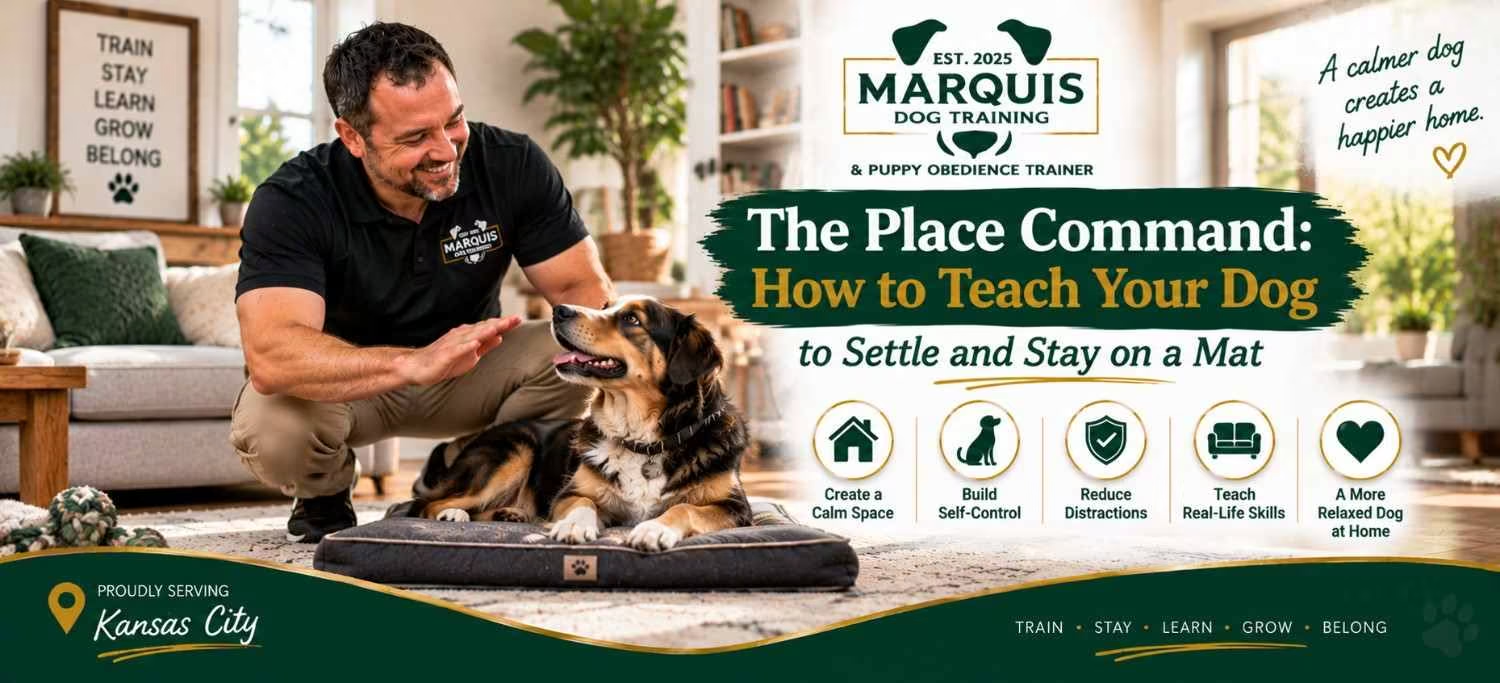
The place command for dogs is one of the most useful behaviors you can teach, and one of the most overlooked. It gives your dog a specific spot, usually a mat, bed, or low platform, where they know to go and stay until released. Unlike a basic stay, which asks a dog to freeze in whatever spot they happen to be in, place gives them a clear destination and a job to do. That makes it a calm, practical answer to a long list of everyday frustrations, from a dog who hovers around the dinner table to one who bolts for the door every time someone knocks.
If your dog already knows a few basics and you want a reliable way to turn that knowledge into calm behavior at home, this is the skill to build next. It also sits naturally alongside the work in our Staying & Coming program, where staying put and coming when called are treated as two halves of the same skill: a dog who can hold position and a dog who can be called out of it.
What the Place Command Actually Teaches
On the surface, the place command for dogs is simple: your dog goes to a designated spot and stays there. Underneath, it teaches several things at once. It builds impulse control, because the dog learns to stay put while interesting things happen nearby. It builds a reliable settle, meaning the dog learns to relax rather than simply wait in a state of high alert. And it gives you a positive alternative to the behaviors you’re trying to stop. Instead of telling a dog what not to do, you give them something specific to do instead.
That last point matters more than most owners realize. A dog who is told “no” for begging at the table has learned only that begging is unwelcome. A dog who is sent to place has learned exactly where to be, and can be rewarded for being there.
Everyday Problems the Place Command Helps Solve
- Hovering and begging around the kitchen or dinner table
- Rushing the door when the doorbell rings or guests arrive
- Underfoot behavior while you cook, work, or carry things
- Difficulty settling down when visitors are in the house
- Restlessness during video calls, family meals, or time on the porch
It also pairs well with other habits, particularly greeting manners. A dog who can go to place when the doorbell rings is far less likely to jump on guests, which we cover in more detail in our guide to stopping a dog from jumping on guests.
What You Need Before You Start
The setup is minimal, but the details matter. You need a mat, bed, or small platform that stays in one place and is clearly distinct from the rest of the floor. A non-slip mat or a raised cot-style bed works well, and many trainers prefer something portable so the same cue can travel with your dog to a friend’s house or a patio. You also need small, soft, high-value treats, a release word you’ll use consistently (“free,” “okay,” and “break” are all common), and a quiet room with few distractions.
Your dog should already be comfortable with a basic down. According to the American Kennel Club, a dog who knows how to lie down and has a clear release word is ready to start learning to go to their place, and building the behavior in small steps is what makes it stick.
You can read the full walkthrough in the American Kennel Club’s guide to teaching your dog to go to their place, which is a good companion to the steps below.
How to Teach the Place Command for Dogs Step by Step
Step 1: Make the mat a great place to be
Start by simply rewarding any interest in the mat. Drop a treat on it, reward a sniff, then a paw, then eventually all four paws. Don’t ask for anything yet and don’t use the cue word. The goal in this first stage is for your dog to decide that the mat is a place where good things happen.
Step 2: Add the down
Once your dog is happily stepping onto the mat, reward them for lying down on it. Mark the moment with a word like “yes,” deliver the treat on the mat itself, and then release them with your release word so they learn that staying on the mat is a choice that eventually ends with permission, not a permanent trap.
Step 3: Build duration
Gradually extend how long your dog stays on the mat before you reward and release. Start with a second or two and work up slowly. Deliver treats while your dog is still on the mat rather than after they leave, since rewarding in position is what makes position valuable. If your dog pops off early, quietly guide them back and shorten the next repetition rather than correcting them.
Step 4: Build distance
Once your dog can hold a down for ten to twenty seconds, start taking small steps away. Begin with one step, return, reward, and release. Then two, then a half-circle around the mat. Change only one variable at a time, adding either duration or distance in a given session but not both together, so your dog can succeed at each level before the next one gets harder.
Step 5: Add the cue
When your dog is consistently going to the mat and settling, say your cue word (“place” or “mat”) just before they move toward it. Over several sessions the word becomes linked to the action. Adding the word too early, before the behavior is reliable, tends to muddy the association.
Step 6: Add distractions
This is the stage where place becomes genuinely useful. Introduce distractions gradually: a family member walking past, a dropped treat out of reach, a knock on the table, and eventually a doorbell or a real visitor. Because the dog has been rewarded all along for staying in position, they have a strong reason to keep doing it even when the world gets more interesting.
How Long Does It Take?
Most dogs learn the basic mechanics of the place command for dogs in a few short sessions, but reliability under real-life distraction takes longer. Expect a few weeks of consistent, brief practice before the behavior holds up around guests or at mealtime. Ten short sessions of two or three minutes each almost always work better than one long session, and dogs who are young, highly energetic, or naturally restless may need a little more patience and a lot more repetition at the early stages.
The more reliable the place command for dogs becomes at home, the more flexible it gets. A dog who has learned place on one mat can usually learn to generalize it to a travel mat or a different room much faster the second time, which is what makes it so portable once it’s solid.
Common Mistakes to Avoid
- Using the mat as punishment. If place feels like a time-out, your dog will stop wanting to go there. It should always be associated with good things.
- Skipping the release word. Without a clear signal that the behavior is over, dogs often invent their own end point, which is usually sooner than you want.
- Adding distance, duration, and distractions together. Raising several criteria at once is the fastest way to a dog who gets up and wanders off.
- Repeating the cue over and over. Say it once, then help your dog succeed rather than stacking up cues.
- Rewarding after the dog leaves. Reward on the mat, in position, so the spot itself becomes the thing the dog wants.
Troubleshooting a Dog Who Won’t Settle
If your dog goes to place but can’t relax once they’re there, they’re probably still in a high-arousal state. Try practicing after a walk or play session, when their energy is lower, and reward calm behaviors like a hip roll, a long exhale, or resting their head on the mat. These small signs of relaxation are worth rewarding in their own right, because they teach the dog that settling, not just staying put, is what earns the treat.
If your dog gets up repeatedly, goes back to the beginning, or seems anxious about being separated from you while on the mat, it’s worth slowing down. For dogs who struggle to stay calm while apart from their people, the pattern may be rooted in something larger, which our Separation Anxiety page addresses directly.
When to Get Professional Help
Most dogs pick up the place command for dogs with consistent practice at home. If yours isn’t progressing, or you’re trying to build reliability around real distractions like visitors, other pets, or a busy household, a trainer can spot what’s getting in the way much faster than trial and error. Our Obedience Training program builds foundational skills like place so they hold up outside the training session.
Frequently Asked Questions
What’s the difference between place and stay?
Stay asks a dog to hold whatever position they’re in, wherever they are. Place sends the dog to a specific spot and asks them to settle there until released, which makes it more practical for everyday household situations.
Can I teach the place command to an older dog?
Yes. Older dogs often learn it quickly because they already know basics like down, and many appreciate having a clear, comfortable spot to settle.
Should I use a bed, a mat, or a raised platform?
Any of them can work. Choose something that stays put, is comfortable, and is easy to carry. Raised platforms are popular because the edge gives the dog a clear boundary.
How often should I practice?
Short sessions of two to five minutes, a few times a day, work far better than occasional long sessions.
What if my dog keeps leaving the mat?
Go back a step. Shorten the duration, reduce the distraction level, and reward more frequently while your dog is in position.
If you’d like help building a reliable place command for dogs that holds up around guests, meals, and a busy household, a complimentary in-home assessment is a good place to start.